

 Voorvertoning
 Verstuur
 Delen
Delen
 Details bekijken
 Gids
Gids

 Download
 Vergelijkbare items
 Röntgenonderzoek
 Diavoorstelling
 Statistieken
Satyr


 Lees meer
Giclée / Kunstafdrukken
Giclée- of canvasafdruk van museumkwaliteit met een snelle productie en flexibele afwerkingsmogelijkheden. ( Bestel handgeschilderde reproductie Schakel over naar digitale afbeeldingen)




P118B €10

P118H €10

P118W €10

P438Z €10

P508JH €12

P508YH €12

P805H €10

P805Z €10

P919BZ €10

P919G €10

P919XJ €10

P959ZH €10

P968JZ €12

W106C €8

W218G €10

W218JH €8

W218Y €10

W307PJ €10

W316G €10

W316PJ €8

W316Y €10

W398PJ €8

W4111J €10

W500HY €15

W500JH €15

W692G €12

W849H €8

W940BG €15

W953PJ €8




Kies uit onze vooraf ingestelde maten die overeenkomen met de originele verhoudingen van het kunstwerk.

Voer de gewenste breedte en hoogte in, passend bij uw lijst of muur. Een afdruk kan alleen worden ingekort en nooit groter worden gemaakt dan het origineel; een formaat met andere verhoudingen zal daarom een deel van de afbeelding verliezen. Wij sturen u een digitaal mockup ter goedkeuring voordat we tot drukwerk overgaan. De afbeelding op deze pagina toont niet de werkelijke uitsnede — dit is alleen te zien op het mockup.
Wereldwijde levering () binnen 2 weken in plaats van de standaard 4/5 weken. (27 oktober)

Gratis wereldwijde expressverzending

Hoogwaardig linnen canvas

Volledige verzendverzekering

Garantie op terugbetaling van invoerrechten

Garantie op exacte kleurweergave

Retourbeleid van 100 dagen (alleen bij defecten)

100% Geld-terug-garantie

Korting bij meerdere afnames
 De optie voor glas is alleen beschikbaar bij een formaat kleiner dan 110 cm.

Satyr
Giclée / Kunstafdrukken
Afmetingen reproductie
-


Eindtotaal
€ 55
The Mythic Embrace of Benvenuto Cellini's Satyr
Benvenuto Cellini’s “Satyr” stands as a captivating testament to the dynamism and sensual allure that defined the Mannerist period in Italian art. Completed around 1545, this bronze sculpture transcends mere representation; it embodies the very spirit of Dionysian revelry and the untamed beauty of the natural world. More than just a depiction of a mythological creature, Cellini’s satyr is an embodiment of potent emotion – a moment frozen in time, brimming with both mischievous energy and a profound, almost melancholic contemplation.
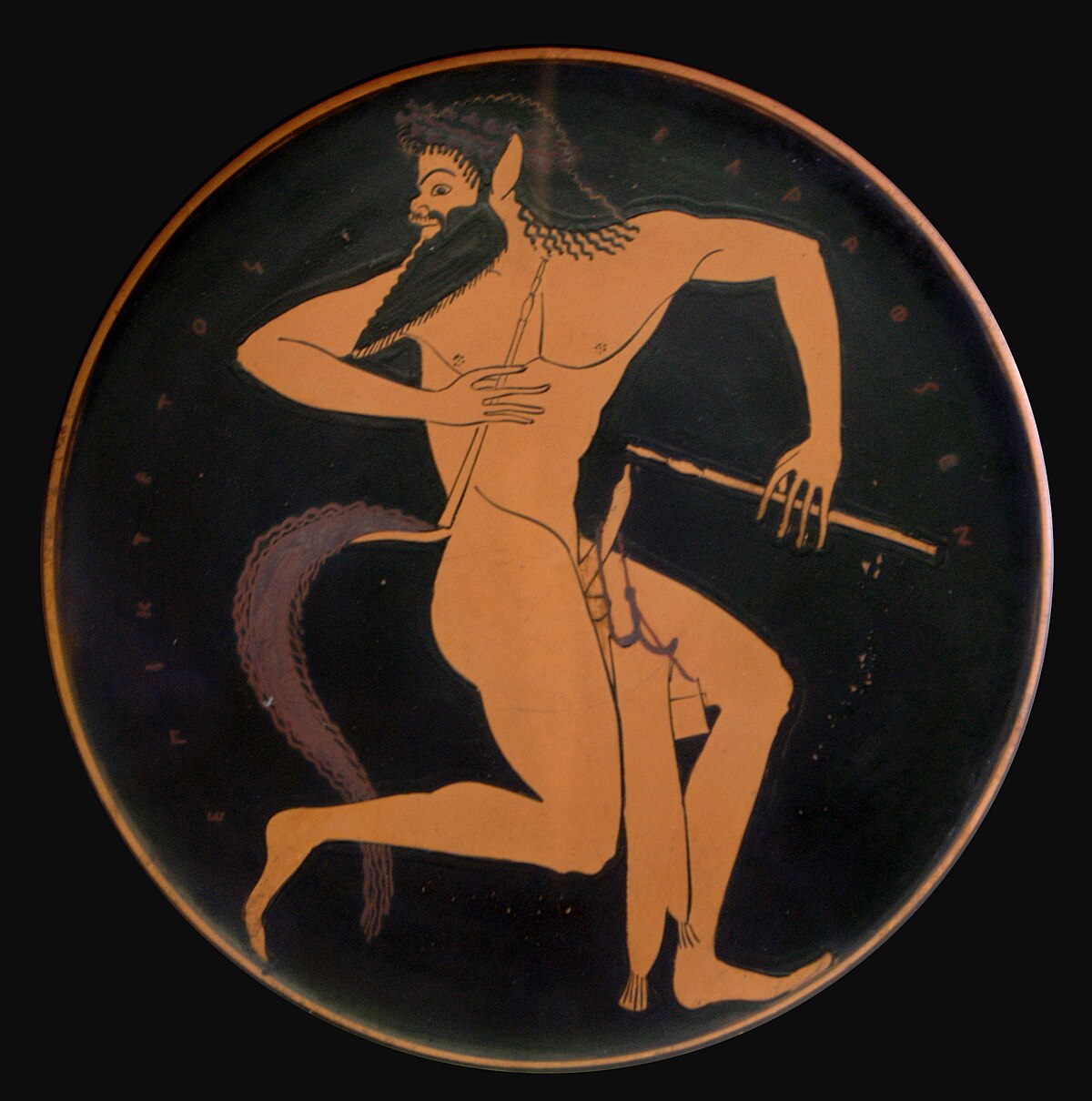
The sculpture itself is a marvel of technical skill and expressive form. Standing nearly four feet tall, the satyr is rendered in a remarkably realistic style, yet imbued with an unmistakable Mannerist flair. His muscular physique, accentuated by the strong lines of his arms and belly, speaks to a primal vitality – a celebration of the body’s inherent power. The details are exquisite: the unruly curls of his hair, the intense gaze of his eyes, the subtle suggestion of a mischievous grin. Notably, the bronze is treated with a rich, aged patina that adds depth and character, hinting at the passage of time and the sculpture's journey through history.
A Glimpse into Renaissance Mythology
Cellini’s satyr isn’t simply a charming figure from Greek mythology; it’s deeply rooted in the cultural context of the 16th century. Satyrs, companions to the god Dionysus, were traditionally associated with wildness, intoxication, music, and fertility – potent symbols of human desires and impulses. In Renaissance Florence, these themes resonated powerfully, particularly within the circles of artists and intellectuals who sought to reconcile classical ideals with contemporary sensibilities. Cellini’s work reflects this complex interplay, capturing both the exuberance and the underlying melancholy inherent in the satyr's existence.
The sculpture’s creation coincided with Cellini’s time at the court of Francis I of France, a period marked by lavish patronage and an embrace of Mannerist aesthetics. This royal commission further elevated the work, imbuing it with a sense of grandeur and sophistication. The choice of bronze as the medium itself is significant – a material prized for its durability, luster, and ability to capture intricate detail.
Symbolism and Artistic Technique
Beyond its mythological subject matter, “Satyr” is rich in symbolic meaning. The satyr’s gesture—raised hand, as if reaching out or beckoning—suggests an invitation into a world of pleasure and abandon. The sculpture's composition, with the satyr presented in profile, creates a sense of intimacy and immediacy, drawing the viewer into his gaze. Cellini masterfully employed techniques such as *repoussé* (hammering metal from the reverse side to create relief) and *chasing* (using tools to refine the surface of the metal), demonstrating his exceptional skill as a goldsmith and sculptor.
The sculpture’s hollow back, filled with fragments of burnt clay and wooden pegs, is particularly intriguing. This deliberate inclusion suggests a layering of meaning—a reference to the satyr's connection to the earth and the cyclical nature of life and death. It also hints at Cellini’s own fascination with materials and his desire to create works that were both beautiful and intellectually stimulating.
A Timeless Masterpiece
Benvenuto Cellini’s “Satyr” remains a powerful and evocative work of art, captivating viewers with its blend of mythological narrative, technical brilliance, and emotional depth. It is a window into the Renaissance world—a celebration of human creativity, sensual desire, and the enduring power of myth. Reproductions by WikiOO offer an exceptional opportunity to bring this iconic masterpiece into your home or office, allowing you to appreciate its beauty and complexity for years to come.
Veelgestelde vragen
Waar wordt het Tall-formaat van "Satyr" aanbevolen te tonen?
Formaat (Tall) en aanbevolen ruimte (Living Room) zijn de twee plaatsingskenmerken vastgelegd voor "Satyr" door Benvenuto Cellini.
Is "Satyr" te bekijken via een augmented reality-preview?
"Satyr" door Benvenuto Cellini kan via de AR-weergave-pagina van het kunstwerk op uw eigen muur worden geproefd met behulp van augmented reality op een compatibel apparaat.
Waar is "Satyr" door Benvenuto Cellini tegenwoordig te zien?
"Satyr" door Benvenuto Cellini is te zien in National Gallery of Art, Washington, USA. De vermelding van het museum heeft betrekking op het originele werk, niet op reproducties.
Vergelijkbare kunstwerken


Biografie kunstenaar
Benvenuto Cellini: Een Renaissance Genie
Benvenuto Cellini, geboren in Florence in 1500 en overleden in 1571, was meer dan slechts een kunstenaar; hij belichaamde de geest van de Italiaanse renaissance. Een goudsmid, beeldhouwer, soldaat, musicus én schrijver – zijn leven was een bruisende mix van passie, ambitie en avontuur, vastgelegd in een autobiografie die even kleurrijk is als zijn kunstwerken. Cellini staat symbool voor het maniërisme, een stijlperiode die volgde op de hoogrenaissance en zich kenmerkte door dramatische flair, complexe composities en een verfijnde elegantie.
Van Muziek naar Metaal: Een Artistieke Opleiding
Cellini’s jeugd was doordrenkt van muziek; zijn vader was een befaamd musicus en instrumentmaker. Aanvankelijk toonde hij zelf ook muzikale aanleg, maar op vijftienjarige leeftijd koesterde hij een onwrikbare passie voor het goudsmidwerk. Tegen de bedenkingen van zijn vader in, werd hij leerling bij Antonio di Sandro, beter bekend als Marcone. Deze beslissing zou zijn leven vormgeven. Zijn vroege jaren waren niet zonder tegenslag; een schermutseling op zestienjarige leeftijd leidde tot ballingschap uit Florence en een periode werken onder de goudsmid Fracastoro in Siena. Deze ervaringen, hoewel turbulent, scherpten zijn vaardigheden en versterkten zijn vastberadenheid.
Meesterwerken in Goud en Brons: De Kunst van Cellini
Cellini’s artistieke nalatenschap is rijk en divers. Zijn goudwerk, met name het beroemde zoutvat voor koning Franciscus I van Frankrijk, getuigt van een ongeëvenaarde beheersing van detail en compositie. Het zoutvat, nu te bewonderen in het Kunsthistorisches Museum in Wenen, is meer dan slechts een functioneel object; het is een sculpturale tour de force vol dynamische figuren en ingewikkelde decoraties. Maar Cellini’s bekendste werk blijft wellicht ‘Perseus met het hoofd van Medusa’, een bronzen beeldhouwwerk dat in de Loggia dei Lanzi in Florence staat. Dit monumentale kunstwerk, gegoten in één stuk – een technisch hoogstandje – toont Perseus triomfantelijk over de verslagen Medusa. De expressie van beweging en emotie die Cellini wist vast te leggen in het metaal is werkelijk adembenemend.
Een Leven Vol Avontuur: Soldaat, Schrijver en Self-Made Man
Cellini was niet alleen een kunstenaar; hij was ook een soldaat, die deelnam aan belegeringen en beweerde een cruciale rol te hebben gespeeld bij de verdediging van Rome. Hij was een begaafd musicus, die cornett en fluit bespeelde aan het pauselijk hof. Maar het is zijn autobiografie die hem echt onderscheidt. Dit openhartige en soms opschepperige verslag biedt een unieke kijk op de kunstwereld, de cultuur en de samenleving van de renaissance. Het boek is gevuld met anekdotes over beschermheren, rivalen en persoonlijke avonturen, waardoor we een levendig beeld krijgen van het leven van deze uitzonderlijke man.
Een Erfenis voor de Eeuwen: Cellini’s Plaats in de Geschiedenis
Benvenuto Cellini stierf in 1571 en liet een onuitwisbare indruk achter op de kunstwereld. Zijn technische vaardigheid, zijn artistieke innovatie en zijn boeiende autobiografie blijven kunstenaars en liefhebbers inspireren. Hij belichaamt het ideale van de renaissance: een veelzijdig genie, gedreven door ambitie en niet bang om zijn individualiteit te uiten. Zijn werken worden bewonderd om hun schoonheid, vakmanschap en dramatische kracht, waardoor hij terecht wordt beschouwd als een sleutelfiguur in de westerse kunstgeschiedenis.

Benvenuto Cellini
1500 - 1571 , Italië
Belangrijkste feiten
- Artistic Movement Or Style: Maniërisme
- Artists Who Influenced This Artist: ['Michelangelo']
- Date Of Birth: 1 november 1500
- Date Of Death: 13 februari 1571
- Full Name: Benvenuto Cellini
- Nationality: Italiaans
- Notable Artworks:
- Zoutvat
- Perseus met Medusa
- Leda en de Zwaan
- Place Of Birth: Florence, Italië
Gerelateerde artikelen

Top 10 Bronzen Beeldhouwwerken die de Kunst Voorgoed Veranderden | WikiOO
Ontdek de 10 meest legendarische bronzen beeldhouwwerken die kunstgeschiedenis schreven! Van Rodin tot Michelangelo, leer over hun meesterwerken & technieken. Vind museumkwaliteit reproducties en inspiratie voor uw interieur op WikiOO.org.

The Enduring Legacy of Bronze: A Historical & Artistic Exploration for the Collector
Explore the rich history & enduring appeal of bronze sculpture with expert insights for collectors at WikiOO. Learn about casting techniques, iconic artists, collecting tips & contemporary interpretations.

The Enduring Legacy of Bronze Sculpture: A Collector's Guide to Form & Cultural Significance
Explore the rich history & enduring appeal of bronze sculpture with expert insights for collectors at WikiOO. Learn about casting techniques, iconic artists, and collecting tips to build a discerning art collection.

The Enduring Legacy of Bronze: History, Technique & Artistic Expression for the Collector
Explore the rich history & enduring appeal of bronze sculpture with expert insights for collectors at WikiOO. Learn about casting techniques, iconic artists, and collecting tips.

Top 10 Legendarische Bronzen Meesterwerken die de Kunst Veranderden | WikiOO
Ontdek de 10 meest legendarische bronzen meesterwerken die de kunstgeschiedenis veranderden! Van Rodin tot Michelangelo, leer over techniek & betekenis. Museumkwaliteit reproducties voor uw interieur op WikiOO.org. Exploreer de collectie online!

