
 Forhåndsvisning

 Send
 Del
 Vis detaljer
 Utskriftsvennlig guide


 Last ned bilde
 Liknende objekter
 Røntgenundersøkelse
 Lysbildefremvisning
 Spørsmål og svar
 Statistikk
Modern Future

- 162.0 x 130.0cm


 Vis hele teksten
Kunstverket som vises på denne siden er beskyttet av opphavsretten, noe som betyr at vi ikke har juridisk tillatelse til å lage eller selge identiske reproduksjoner. Denne beskyttelsen håndheves i henhold til internasjonale avtaler som for eksempel Bernerkonvensjonen og av nasjonale lover, inkludert de som er fastsatt i Amerikansk lov om opphavsrett – Tittel 17.
Denne metoden er i fullt samsvar med opphavsrettslige regler, da den ikke innebærer kopiering eller duplisering av det beskyttede kunstverket. I stedet er det snakk om en kreativ nytolkning – et nytt maleri som er inspirert av originalen, men ikke identisk med den.
Giclée / Kunsttrykk
Giclée- eller lerretsprint av museumskvalitet med rask produksjon og fleksible valgmuligheter for etterbehandling. ( Kjøp håndmalt maleri Bytt til digitalt bilde)
































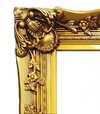
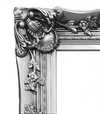
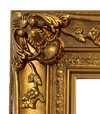

Velg mellom våre forhåndsdefinerte størrelser som bevarer kunstverkets opprinnelige proporsjoner.

Skriv inn ønsket bredde og høyde for å tilpasse trykket til din ramme eller vegg. Et trykk kan kun beskjæres, aldri skaleres opp utover motivets opprinnelige størrelse, noe som betyr at et format med andre proporsjoner vil føre til tap av deler av bildet. Vi sender deg en digital mockup for godkjenning før vi starter trykkeprosessen. Bildet som vises på denne siden viser ikke den faktiske beskjæringen — det er kun mockuppen som viser dette.
Verdensomspennende levering () på 2 uker i stedet for standard 4/5 uker. (18 November)

Gratis ekspressfrakt over hele verden

Lerretsduk av lin av høy kvalitet

Full transportforsikring

Garanti for refusjon av toll og importavgifter

Garantert fargegjengivelse

100 dagers returrett ved fabrikasjonsfeil

100% pengene tilbake-garanti

Rabatt ved flere kjøp
 Glassalternativet er kun tilgjengelig i størrelser under 110 cm

Modern Future
Giclée / Kunsttrykk
Størrelse på reproduksjon
-


Totalpris for valgte alternativer
Nkr 583
Lignende kunstverk


Om kunstneren
Early Life, Family and Training
Antonio Corpora was born in Tunis on 15 August 1909 to Sicilian parents. This Mediterranean background provided the initial context for a career that would eventually move toward the center of European abstraction. His formal education began at the Tunis Institute of Fine Arts, where he developed the technical foundation necessary for his later departures from traditional form. During this formative period, he studied under the mentorship of Armand Vergeaud, a relationship that anchored his early development before his move toward the continental avant-garde.
The trajectory of his career shifted decisively in 1930 when Corpora moved to Paris. By 1931, he had settled in the city, entering a landscape that was rapidly redefining modernism. It was in this environment that he met Alberto Giacometti and Sergio Signori. These encounters placed him directly within the intellectual and social circles that would dictate the direction of mid-century art. His presence in Paris was not merely a change of scenery; it was a deliberate immersion into the core of the era's most significant aesthetic shifts.
Artistic Movements and Style
Corpora’s evolution is marked by a decisive break from structure. During the 1930s, his practice relied on abstract and geometric compositions, heavily shaped by the logic of Cubism and the color palettes of Fauvism. This period of controlled form eventually gave way to a more fluid approach. By 1946, he was actively pushing against these established boundaries, promoting a "Neo-Cubist" exhibition in Rome. His subsequent involvement with the Fronte Nuovo delle Arti signaled a shift toward a post-cubist sensibility that rejected rigid construction in favor of something more visceral.
The transition toward abstraction became more radical as his career progressed. He moved away from geometric certainty, embracing the spontaneous gestures of Tachisme and the energy of Abstract Expressionism. By the 1960s, his output aligned with the Informel movement, characterized by a rejection of traditional shape. This was not a mere change in preference but a fundamental shift in how he handled the physical surface of the work.
In his later years, the tactile nature of his painting became his primary concern. From about 1975, Corpora utilized a specific dripping technique to build texture. He worked on canvases roughened with sand and plaster of Paris, creating a rugged, physical landscape for his colors. This method allowed for a depth that relied on the material properties of the medium rather than the illusion of perspective.
Exhibitions and Professional Recognition
Corpora’s presence in the international circuit was cemented through repeated participation in the Venice Biennale. He exhibited there four times, securing a solo show at the event in 1960. His standing within the Italian art scene was further validated in 1952 when he was presented as part of the "Group of Eight" at the Venice Biennale. This period marked a significant moment of institutional recognition for his evolving approach to abstraction.
His career concluded with high-level state and academic honors. In 2003, the president of Italy presented him with an award, acknowledging his long-term contribution to the arts. He also achieved membership in the San Luca Academy. These distinctions reflect a professional trajectory that moved from the experimental fringes of post-cubist movements into the established core of Italian artistic institutions.

Antonio Corpora
1909 - 2004 , Tunisia
Kort om kunstneren
- Artistic Movement Or Style:
- Tachisme
- Abstract Art
- Fronte Nuovo delle Arti
- Cubism
- Fauvism
- Abstract Expressionism
- Informel
- Neo-cubista
- Artists Who Influenced This Artist:
- Armand Vergeaud
- Braque
- Matisse
- Full Name: Antonio Corpora
- Nationality: Italian
- Place Of Birth: Tunis, Tunisia
- Date Of Birth: 1909
- Date Of Death: 2004
Relaterte artikler

Kinetic Force: Analyzing Speed and Mechanical Progress in Futurist Art
Explore the radical energy of Futurism through Balla and Malevich. Discover how speed redefined modern art history now.

Masterpieces of Munich: Top 25 Artworks in the Bavarian State Painting Collections
Explore 25 iconic masterpieces from Munich's Bavarian State Painting Collections. Discover timeless art on WikiOO.org.

Masterpieces of Munich: Top 25 Artworks in the Bavarian State Painting Collections
Explore 25 iconic masterpieces from Munich's Bavarian State Painting Collections. Discover timeless art on WikiOO.org.

25 Must-See Masterpieces at the Alte Pinakothek, Munich
Embark on a journey through the Alte Pinakothek’s finest treasures. From Renaissance masters to Baroque drama, explore 25 iconic paintings and find museum-quality art reproductions for your space. Discover all masterpieces on WikiOO.org.