- 132.0 x 196.0 cm


 Podgląd w skali 1:1
 Wyślij jako kartkę
 Udostępnij
 Szczegóły dzieła
 Przewodnik

 Pobierz obraz
 Podobne obiekty
 RTG
RTG Pokaz slajdów
 Q&A
Q&A Statystyki
Look closer
Every detail, painted by hand
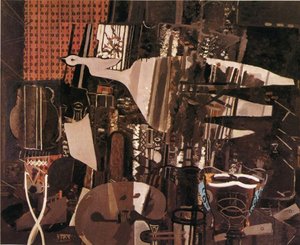
Georges Braque’s Fauvist masterpiece ‘The Studio (VIII)’ explodes with vibrant ochre, crimson, and turquoise hues—a bold departure from Cubism's geometric precision—capturing a dynamic studio scene. Explore this iconic artwork and its enduring legacy at WikiArt.org.
i.
The heart of the scene.
ii.
Light and background.
iii.
The brushwork.
The painting
A Symphony of Color and Geometric Precision
In the vast pantheon of twentieth-century modernism, few works capture the rhythmic pulse of creative existence as intimately as Georges Braque’s “The Studio (VIII)”. Painted in 1954, this masterpiece serves as a profound meditation on the artist's sanctuary, transforming a familiar workspace into a complex tapestry of light and form. While many associate the Cubist movement with a certain intellectual austerity, Braque breathes a vibrant, almost lyrical life into this canvas. The painting does not merely depict a room; it orchestrates a sensory experience where the boundaries between objects dissolve into a dance of color and geometry.
The composition is a masterful exercise in deconstructing space. Braque employs the foundational tenets of Cubism—the fragmentation of subjects into multifaceted planes—to present a view that rejects traditional, singular perspective. Instead, the viewer is invited to witness multiple viewpoints simultaneously, creating a sense of depth that feels both structured and fluid. A bird, a recurring and poignant motif in Braque’s later oeuvre, appears to soar diagonally through the frame, acting as a dynamic element that guides the eye across the canvas. This movement is mirrored by the placement of figures and objects, from the subtle presence of people near the periphery to the unexpected inclusion of a car and a chair, all woven into a cohesive, rhythmic arrangement.
The Vibrant Pulse of Fauvist Influence
What distinguishes “The Studio (VIII)” from the more monochromatic experiments of early Cubism is its breathtaking embrace of a Fauvist palette. Braque utilizes bold, expressive hues—deep ochres, rich crimsons, and striking turquoises—to imbue the scene with an emotional resonance that transcends mere representation. These colors are not merely decorative; they are the very heartbeat of the painting. The interplay between these saturated tones creates a luminous surface that seems to pulsate with energy, reflecting the internal fire of the creative process itself.
For the discerning collector or interior designer, this painting offers an unparalleled opportunity to introduce a sense of sophisticated dynamism into a space. The technique involves a masterful manipulation of pigment, where each brushstroke contributes to a larger, textured landscape of light. The way the light catches the different planes of color can transform the atmosphere of a room, providing a focal point that is both intellectually stimulating and visually soothing. It is a piece that demands attention through its complexity yet rewards the viewer with a sense of profound harmony.
A Legacy of Innovation and Emotion
To look upon “The Studio (VIII)” is to witness the culmination of a lifetime of artistic evolution. Braque, a pioneer who worked alongside Picasso to redefine the limits of perception, brings his entire history—from his early training in the craft of decoration to his radical deconstructions of form—into this single, late-career triumph. The painting stands as a testament to the enduring power of the studio as a site of metamorphosis, where the mundane objects of daily life are elevated to the realm of the sublime through the lens of artistic vision.
Whether one is drawn to its historical significance within the Cubist and Fauvist traditions or moved by its evocative, swirling energy, this work remains a timeless icon. It offers more than just aesthetic beauty; it provides a window into the very soul of modern art. For those seeking to adorn their collections with a piece that embodies both technical mastery and emotional depth, Braque’s “The Studio (VIII)” remains an essential and breathtaking choice.
Pytania i odpowiedzi
W którym roku i w ramach jakiego nurtu powstało dzieło "The Studio (VIII)"?
Dzieło "The Studio (VIII)" powstało w 1954 roku i reprezentuje nurt Cubist Still Life.
Do którego okresu twórczości Georges Braque należy dzieło "The Studio (VIII)"?
W dorobku artystycznym Georges Braque dzieło „The Studio (VIII)” przypada na Mature Period. Ten etap pozwala zestawić je z innymi pracami twórcy.
Do jakiego wnętrza polecane jest dzieło „The Studio (VIII)” – Georges Braque?
Dzieło „The Studio (VIII)” – Georges Braque jest rekomendowane do Living Room. Sugestia ta opiera się na tematyce, kolorystyce oraz nastroju pracy.
Ten utwór podlega ochronie prawem autorskim
Dzieło sztuki prezentowane na tej stronie podlega ochronie prawem autorskim, co oznacza, że nie mamy prawa do tworzenia ani sprzedaży jego identycznej reprodukcji. Ochrona ta jest egzekwowana na mocy umów międzynarodowych, takich jak Konwencja berneńska oraz przez przepisy prawa krajowego, w tym te określone w Prawo autorskie USA – Tytuł 17.
Jako pełną szacunku i legalną alternatywę oferujemy personalizowane, malowane ręcznie dzieła sztuki inspirowane oryginałem. Nasi wykwalifikowani i profesjonalni artyści starannie analizują styl, nastrój oraz artystyczną esencję pierwowzoru, aby stworzyć nowe, unikalne dzieło, które przywołuje te same emocje – pozostając jednocześnie w pełni oryginalną kreacją.
Metoda ta jest w pełni zgodna z przepisami prawa autorskiego, ponieważ nie polega na kopiowaniu ani powielaniu chronionego dzieła. Stanowi ona kreatywną reinterpretację – nowy obraz, który czerpie inspirację z oryginału, ale nie jest z nim tożsamy.
 Dowiedz się więcej
Georges Braque
1882 - 1963, Francja
The painter
Poznaj Georges’a Braque'a (1882-1963): pioniera Kubizmu i mistrza Fauwizmu! Eksploruj jego innowacyjne dzieła sztuki, od „Domów przy L’Estaque” po oszałamiające kolaże. Jego twórczość zmieniła oblicze sztuki nowoczesnej!
Biografia artysty
Early Life and Artistic Foundations
Georges Braque, urodzony w Argenteuil, Francja, w 1882 roku, rozpoczął drogę artystyczną głęboko związana z ewolucją krajobrazu sztuki nowoczesnej. Jego wychowanie w rodzinie malarzy i dekoratorów nie tylko zapewniło mu biegłość techniczną w materiałach, ale także od najmłodszych lat rozwijało go docenianie formy i struktury. Początkowo podążając za ścieżką ojca, intuicja artystyczna Braque szybko popchnęła go ku formalnemu szkoleniu w École des Beaux-Arts w Le Havre, otwierając drogę do zostania jednym z najbardziej wpływowych malarzy XX wieku. Ta fundacja – połączenie praktycznej rzemiosła i studiów akademickich – okazała się kluczowa, ponieważ później dekonstruował i odtwarzał tradycyjne konwencje artystyczne.
Przenosząc się do Paryża w 1902 roku, Braque kontynuował studia w Académie Humbert, zanurzając się w tętniącym życiem środowisku artystycznym miasta. To właśnie tutaj poznał takich artystów jak Marie Laurencin i Francis Picabia, tworząc więzi, które ukształtowały jego rozwój wczesny. Jego początkowe prace odzwierciedlały wpływy impresjonizmu i postimpresjonizmu, ale kluczowe spotkanie z odważnymi kolorami i ekspresyjną wolnością fauwistów w 1905 roku zapaliło nową drogę w jego eksploracji artystycznej.
The Embrace of Fauvism and the Dawn of Cubism
Adopcja przez Braque zasad fauwizmu – charakteryzująca się intensywnymi, nienaturalistycznymi kolorami i ekspresją emocjonalną – doskonale ilustruje się w obrazach takich jak The Patience. Okres ten widniał przy jego boku artyści, tacy jak Henri Matisse i André Derain, eksperymentując z żywymi paletami i uproszczonymi formami. Jednak zaangażowanie Braque w fauwizm nie było jedynie naśladowcze; wzbogacił je o unikalną wrażliwość, łagodząc niekontrolowaną ekscytację ruchu, wprowadzając bardziej powściągliwy i analityczny podchod.
Przełom nastąpił w 1907 roku dzięki spotkaniu z wystawą retrospektywną dzieł Paula Cézanne’a. Nacisk Cézanne'a na formy geometryczne i wielotomowe perspektywy głęboko wpłynął na Braque, przygotowując grunt pod jego przełomową współpracę z Pablo Picasso. Od 1908 roku ci dwaj artyści-legenda rozpoczęli intensywne intelektualne wymiany, które dały początek kubizmowi – rewolucyjnemu ruchowi, który zburzył tradycyjne koncepcje reprezentacji. Braque i Picasso wspólnie opracowywali analizujący kubizm, rozkładając obiekty na geometryczne kształty i prezentując je z wielu perspektyw jednocześnie, kwestionując percepcję przestrzeni, formy i rzeczywistości widza.
Wczesne prace, takie jak Houses at L'Estaque, demonstrują ten wczesny etap, ukazując radykalną odmienność od konwencjonalnej perspektywy i skupienie na podstawowej strukturze form. Paleta była celowo przygaszona, podkreślając formę nad kolorem, aby reprezentować całość obecności obiektu, a nie tylko jego wygląd.
Innovation Through Fragmentation and Collage
Współpraca Braque z Picasso kontynuowała rozszerzanie granic ekspresji artystycznej, prowadząc do rozwoju syntetycznego kubizmu około 1912 roku. Ta faza obejmowała wprowadzenie kolażu – włączania rzeczywistych materiałów, takich jak wycinki gazet, papier ścierny i tkaniny, do obrazów. Ta innowacja podważała tradycyjną hierarchię między malarstwem a rzeźbiarstwem, zacierając granice między sztuką a życiem.
Pionierskie użycie Braque’a *papier collé* (pasted paper) stanowiło znaczący punkt zwrotny w jego rozwoju artystycznym. Włączając fragmenty codziennych przedmiotów do swoich kompozycji, zakłócał iluzoryczną przestrzeń tradycyjnego malarstwa i wprowadzał nowy poziom materialności i faktury.
Wypadek I wojny światowej w 1914 roku przerwał tę intensywną współpracę, ponieważ Braque został wezwany do służby wojskowej. Doświadczenia wojenne głęboko wpłynęły na jego wizję artystyczną, prowadząc go do eksploracji bardziej osobistych i lirycznych tematów w swojej twórczości powojennej.
Later Years and Enduring Legacy
Po wojnie Braque’s style ewoluował poza ścisłe ramy kubizmu, integrując elementy klasycznej kompozycji i odnowione zainteresowanie pejzażem. Mimo że zachowywał geometryczne wpływy, które definiowały jego wcześniejsze prace, rozwijał bardziej wyrafinowaną i kontemplacyjną metodę malowania. Jego późniejsze krajobrazy i wnętrza charakteryzują się spokojną atmosferą i subtelnymi harmoniami kolorów.
Przez całą karierę Braque pozostawał zaangażowany w eksplorację podstawowych zasad formy, przestrzeni i reprezentacji. Kontynuował eksperymentowanie z różnymi materiałami i technikami, rozszerzając granice ekspresji artystycznej do śmierci w 1963 roku. Jego wpływ na kolejne pokolenia artystów jest niezrównany, kształtując bieg historii sztuki nowoczesnej i inspirując wielu malarzy, rzeźbiarzy i twórców kolażu.
Influences and Notable Works
- Influenced By: Henri Matisse, André Derain, Paul Cézanne
- Key Works: Houses at L'Estaque, The Patience, Violin and Palette, Mandola
- Impact on Art History: Revolutionized 20th-century art through Cubism; challenged traditional notions of perspective and representation.
Quick facts about Georges Braque
- Artistic Movement Or Style: Kubizm, Fauwizm
- Artists Or Movements Influenced By This Artist:
- Pablo Picasso
- Sztuka nowoczesna
- Artists Who Influenced This Artist:
- Henri Matisse
- Paul Cézanne
- Date Of Birth: 13 maja 1882
- Date Of Death: 31 sierpnia 1963
- Full Name: Georges Braque
- Nationality: Francuz
- Notable Artworks:
- Domki w L'Estaque
- Cierpliwość
- Skrzypce i dzban
- Place Of Birth: Argenteuil, Francja


Ręcznie malowana reprodukcja olejowa
Have it painted for you
Ręcznie malowana reprodukcja olejowa
Ręcznie malowany obraz olejny na płótnie, wykonany na zamówienie przez naszych artystów w wybranym przez Ciebie wymiarze i oprawie. ( Przełącz na wydania drukowane Przejdź do wersji cyfrowej)

Your commission

The Studio (VIII)
Technika reprodukcji
Wymiary reprodukcji
-

Wybitny mistrz artystyczny
Większa szczegółowość, finezja i dodatkowy czas na realizację
-

Opcje oprawy reprodukcji
-
-
W przypadku dzieł sztuki lub reprodukcji, których którykolwiek z boków przekracza 105 cm (około 41 cali), rama zostanie wysłana w formie zestawu do samodzielnego montażu. Metoda ta zapewnia bezpieczną dostawę i zapobiega uszkodzeniom podczas transportu.
Wymagany profesjonalny montaż – nie jest to produkt typu DIY.
Zestaw musi zostać złożony, a płótno naciągnięte przez doświadczonego profesjonalnego ramiarza, przy użyciu kleju do drewna (brak w zestawie), kleszczy do naciągania płótna oraz ścisków, które utrzymają krosna w równej pozycji podczas schnięcia kleju. Nieprawidłowy montaż lub nierównomierne napięcie płótna może trwale uszkodzić dzieło sztuki i nie podlega naszej gwarancji.
 W przypadku dzieł sztuki lub reprodukcji, których którykolwiek z boków przekracza 105 cm (około 41 cali), rama zostanie wysłana w formie zestawu do samodzielnego montażu. Metoda ta zapewnia bezpieczną dostawę i zapobiega uszkodzeniom podczas transportu.
W zestawie znajdują się wszystkie listwy z litego drewna, precyzyjnie docięte do wymiarów.
Montaż odbywa się przy użyciu dołączonych wkrętów oraz kleju do drewna do łączenia narożników, którego zestaw nie zawiera i który musi zostać dostarczony przez ramiarza.
Wymagane są profesjonalne narzędzia, których nie ma w zestawie: kleszcze do naciągania płótna (napinacz) oraz zaciski, które pozwolą utrzymać listwy w równej pozycji podczas schnięcia kleju.
Ważne:
Do połączenia narożników niezbędny jest klej do drewna, listwy należy unieruchomić za pomocą ścisków do momentu całkowitego wyschnięcia kleju, a naciągnięcie płótna na złożoną ramę wymaga użycia kleszczy do naciągania płótna. Żaden z tych elementów nie jest dołączony do zestawu. Przed zamówieniem tego rozmiaru zalecamy konsultację z doświadczonym ramiarzem.

Etykieta obiektu
-
-

Lakier ochronny
Lakier z połyskiem (pogłębia kolory, chroni przed światłem i wilgocią)
-

Personalizacja dzieła
Przykłady możliwości personalizacji: zastąp twarz zdjęciem klienta; dodaj zwierzę domowe (np. zamień kota na psa); umieść ukrytą wiadomość w tle; zmień krajobraz lub elementy tła.
-

Ekspresowa
Dostawa na cały świat () w ciągu 3–4 tygodni zamiast standardowych 5 tygodni. (1 Listopad). Bez kompromisów w kwestii jakości.
-
Przesyłka ekspresowa
Dostawa na cały świat () w ciągu 5 tygodni. (8 Listopad).
W cenie
Cena całkowita
zł 1031
Opcja ze szkłem jest dostępna wyłącznie w rozmiarach poniżej 110 cm
i.
Scale
The original measures 132.0 x 196.0 cm. Slide to your wall: every size keeps its proportions.
Wybierz spośród naszych standardowych rozmiarów, które zachowują oryginalne proporcje dzieła sztuki.

Wpisz wymaganą szerokość i wysokość, aby obraz pasował do Twojej ramy lub ściany. Ponieważ jest to dzieło malowane ręcznie, w przypadku rozmiaru o innych proporcjach artysta może domalować nieco więcej wokół obrazu lub przyciąć jego fragmenty — wybór należy do Ciebie. Przed rozpoczęciem pracy prześlemy Ci cyfrową wizualizację do zatwierdzenia. Obraz widoczny na tej stronie nie przedstawia rzeczywistego efektu — jedynie wizualizacja oddaje realny rezultat.
ii.
Frame
The frame is drawn on the painting at its true width.
W oprawie

White zł1

Blurside zł1

Extended zł1

P118B zł10

P118H zł10

P118W zł10

P438Z zł10

P508JH zł12

P508YH zł12

P805H zł10

P805Z zł10

P919BZ zł10

P919G zł10

P919XJ zł10

P959ZH zł10

P968JZ zł12

W106C zł8

W218G zł10

W218JH zł8

W218Y zł10

W307PJ zł10

W316G zł10

W316PJ zł8

W316Y zł10

W398PJ zł8

W4111J zł10

W500HY zł15

W500JH zł15

W692G zł12

W849H zł8

W940BG zł15

W953PJ zł8

H24-GOLD zł30

H24-SILVER zł30

H36-GOLD zł45

H36-SILVER zł45
iii.
Make it yours
A painting made by hand can be made for one person.
After order, WikiOO.org team will email client for instructions and provide a mockup preview
iv.
Finishing
Nameplate, varnish and delivery.
Etykieta obiektu
Szczegóły grawerowanej brązowej tabliczki
This elegant plaque features the artist's name and the title of the artwork, finely engraved for a timeless presentation.
It is made from bronze with a refined, elegant finish. The text is precisely laser-engraved for a sharp and permanent result. Measuring 9x2 cm, the plaque is compact yet easy to read. It's built to be durable and scratch-resistant, offering a professional, museum-quality look. Mounting is simple thanks to the included adhesive backing.
Szczegóły przezroczystej tabliczki akrylowej
The plaque includes essential engraved details such as the artist's name, the title of the artwork, the date it was created, the type of media used-like oil on canvas or watercolor-a brief description of the piece, and a QR code that links to the complete artwork information.
It is crafted from clear acrylic, offering a sleek, modern appearance. The text is UV-engraved in black to ensure strong visual contrast. With a size of 10x15 cm, it ensures optimal readability. It comes equipped with two metal hooks for secure wall mounting. The plaque is designed to be weather-resistant, making it suitable for various environments, and it includes interactive features that work seamlessly with smartphone scanning.
Szczegóły czarnej tabliczki akrylowej
This elegant plaque includes engraved information such as the artist's name, the title of the artwork, the date it was created, the type of media used (like oil on canvas or watercolor), a short description of the artwork, and a QR code for quick access to more information.
The plaque itself is made from refined black acrylic with a premium finish. The text is laser-engraved in white for high contrast and readability. Its size is 10x15 cm, designed to be easy to read. It comes with two metal hooks for professional mounting. The design is sleek and fits any interior style. It is also weather-resistant and durable, with built-in digital integration for mobile compatibility.
Lakier ochronny
Produkcja ekspresowa
Dostawa na całym świecie () w ciągu 3–4 tygodni zamiast standardowych 5 tygodni. (1 Listopad). Bez kompromisów w kwestii jakości.
- Bezpłatna ekspresowa wysyłka na cały świat
- Wysokiej jakości płótno lniane
- Pełne ubezpieczenie przesyłki
- Gwarancja zwrotu należności celnych i podatków importowych
- Gwarancja wiernego odwzorowania kolorów
- 100-dniowa polityka zwrotów (tylko w przypadku wad)
- Gwarancja 100% zwrotu pieniędzy
- Zniżka przy zakupie wielu sztuk


Quick facts and art quiz
Powiązane artykuły

Georges Braque: Pioneering Cubism & the Evolution of Modern Form
Explore the revolutionary art of Georges Braque, a pioneer of Cubism alongside Picasso. Discover his artistic evolution, key works, and lasting impact on modern art. A guide for discerning collectors.

Mastering Cubism: A Collector's Guide to the Revolutionary Vision of Georges Braque
Discover the profound legacy of Georges Braque. Our expert guide explores the evolution of Cubism, from Analytic deconstruction to Synthetic innovation, offering deep insights for discerning art collectors and connoisseurs of modern masterpieces.

Georges Seurat: 25 Arcydzieł Punktalizmu dla Twojego Domu | WikiOO.org
Odkryj 25 arcydzieł Georges'a Seurata! Poznaj historię punktalizmu, impresjonistyczne pejzaże i fascynującą technikę malarską. Reprodukcje obrazów najwyższej jakości na WikiOO.org – inspiracje do Twojego wnętrza. Eksploruj pełną kolekcję online!

Georges Braque: 25 Arcydzieł Kubizmu i Nowoczesnej Sztuki | WikiOO.org
Odkryj 25 arcydzieł Georges'a Braque – pioniera kubizmu i malarstwa nowoczesnego. Poznaj historię, techniki i inspiracje za jego najsłynniejszymi obrazami. Reprodukcje najwyższej jakości na WikiOO.org! Eksploruj pełną kolekcję online.
Podobne dzieła