
Modica, Sicily (Edward Lear)


Giclée reproduction: 27 x 38 cm for $43
Hand-painted oil version, sizes from $241
- Free Worldwide Shipping in 3 to 4 Weeks
- Rolled prints delivered in 3 to 4 weeks
- 100-day returns, money back
- Rated 4.9/5 by 241 customers on ArtShopReviews.com
 Preview

 Send
 Share
 Details
 Fact sheet


 Download
 Similars
 X-Ray
 Diaporama
 Q&A

 Stats
Look closer
Every detail, faithfully reproduced
Three spots of the painting, enlarged. Our giclée printing keeps each of them, at the size you choose.
i.
The heart of the scene.
ii.
Light and background.
iii.
The brushwork.
The painting
Modica, Sicily (Edward Lear): description
A watercolor sketch of a sunlit plaza and bridge in Sicily, rendered with loose, sketchy lines and muted earthy tones on textured paper.
 Full article on Modica, Sicily
Edward Lear: biography
Victorian ornithological draughtsman and poet of whimsical nonsense verse, known for delicate watercolor landscapes and bird illustrations.
Identification of Modica, Sicily by Edward Lear
In this watercolor sketch, Edward Lear turns his attention to the specific topography of Modica, Sicily. The work is a landscape depiction that seeks to capture the essence of the town's architecture and its unique setting. Rather than a formal study, it presents a loose, observational view of the clustered buildings and the central plaza that defines the settlement.
The subject matter focuses on the intersection of human habitation and the natural landscape. Lear has rendered the townscape with a sense of quiet observation, focusing on how the structures sit within the Sicilian terrain. It is a direct record of a specific place, capturing the way the buildings gather around the waterway and the bridge that spans it.
Composition and Visual Elements
The arrangement of this scene is centered upon the town's plaza, creating a focal point for the viewer's eye. Buildings cluster around this central space, their forms acting as a frame that contains the view and directs attention inward. A bridge spans a waterway, providing a steady horizontal element that anchors the middle ground and guides the eye across the composition.
In the background, a large rock formation rises to dominate the skyline, lending a sense of scale to the architecture below. Throughout the plaza, small figures are scattered, their presence providing a subtle sense of activity within the townscape. These figures suggest the quiet rhythm of everyday life without overwhelming the structural elements of the landscape.
Technique and Artistic Materials
In this work, Lear employs watercolor on paper to capture the specific atmosphere of the Sicilian landscape. He relies heavily on a wet-on-wet technique, a method that allows the pigments to bleed and blend into one another directly on the surface. This approach creates a soft, fluid quality where the sky and the water seem to merge through natural diffusion. It is a delicate process that requires a certain level of spontaneity to manage how the colors interact before they dry.
The artist's hand is visible through loose brushwork and sketching that define the architecture and the rugged terrain. Rather than seeking rigid precision, the lines suggest form and texture, providing a sense of immediacy to the scene. He utilizes watercolor paints alongside ink to achieve this layered effect. The ink likely assists in the more structural aspects of the sketch, while the washes of color provide the necessary depth and atmospheric softness.
Style and Visual Impression
This watercolor sketch captures the essence of Modica, Sicily, through a style characteristic of Edward Lear's travel sketches. It moves between the precision of a topographical record and a more whimsical, slightly naive approach to the landscape. There is a certain lightness here, a sense of the artist capturing a moment of observation rather than attempting a heavy, dramatic composition. The work sits comfortably within the realm of Romantic landscape painting, yet it avoids the grandiosity often associated with the movement, opting instead for a quiet, observational intimacy.
The impression is one of tranquility and nostalgia. By employing a loose, sketchy line to define the buildings and the central plaza, the artist suggests form and texture without the need for rigid, exacting detail. This approach allows the viewer to feel the atmosphere of the Sicilian townscape rather than just seeing its geometry. The figures scattered throughout the plaza add a subtle layer of everyday life, grounding the scene in a sense of lived experience. It is a quiet study of a specific place, rendered with a gentle, contemplative touch.
Color, Light, and Texture
The palette here is quiet, leaning into muted and earthy tones that reflect the natural stone of the Sicilian landscape. Browns, tans, and grays dominate the scene, grounding the architecture and the rugged rock formations in a sense of permanence. These colors are applied in soft washes, which allow the pigment to bleed and blend, creating an atmospheric effect that suggests the hazy quality of the Mediterranean air.
Light enters the composition as a diffused daylight, avoiding harsh shadows or sharp contrasts. This gentle illumination settles over the plaza and the buildings, highlighting the forms without overwhelming them. It is a subtle light, the kind that feels captured in a moment of stillness. The watercolor technique leaves a tactile quality on the surface, where visible brushstrokes and the natural grain of the paper provide a subtle, organic texture to the buildings and the sky.
Perspective and Depth
In this watercolor, Lear achieves a sense of spatial recession through a careful application of atmospheric perspective. As the eye moves toward the background, the distant rock formations and the upper reaches of the townscape appear paler and lose their fine detail. This softening of the landscape allows the viewer to perceive the vast scale of the Sicilian terrain without the need for rigid, mathematical precision. It is a subtle, observational method that mirrors the way the eye naturally perceives light and air over a distance.
The structural depth of the plaza is established through the use of linear perspective, found in the receding lines of the clustered buildings and the streets that lead toward the center. This is further reinforced by the way forms overlap one another, creating distinct layers of space from the figures in the foreground to the architecture in the midground. By varying the intensity of his color washes, Lear ensures that the closer elements maintain a greater presence, while the more distant structures recede into a soft, muted haze.
Related Works by Edward Lear
To understand the landscape sensibilities present in this Sicilian scene, one might look toward Lear's other explorations of the Mediterranean. His 1847 watercolor, Quarries of Syracuse, captures a similar sense of rugged grandeur along the Sicilian coastline. During that same period, his interest in the island's topography led him to produce oil sketches of Mount Etna, which emphasize the scale of the volcano through bold brushwork and the characteristic haze of the region.
His travels often moved between the natural world and the structured presence of civilization. This is evident in his landscape painting, View Of Reggio And The Straits Of Messina, which captures a panoramic vista of a coastal city. Similarly, A View of the Roman Campagna, a Villa and Aqueduct in the Distance, reflects his ability to document the specific light and ancient terrain of the Italian countryside. These works demonstrate a consistent interest in how architecture and topography interact within the Mediterranean light.
Questions & Answers
Is this reproduction of Modica, Sicily painted by hand or printed?
Printed: Modica, Sicily is reproduced as a giclée print on cotton canvas or on Epson archival canvas paper.
What size should I choose for Modica, Sicily?
Sizes run from 26.5 x 37.8 cm ($43) to 170.9 x 243.6 cm ($355); the table on this page lists the main steps and their prices.
How long does delivery take?
A print rolled in a tube travels free by regular post and arrives in 3 to 4 weeks; a stretched or framed print takes 4 to 5 weeks. Express courier delivery exists only with the paid Express Delivery option offered on this page. You can return it within 100 days for a full refund, with no condition.
What medium did Edward Lear use for Modica, Sicily?
Watercolor.

Edward Lear
1812 - 1888, United Kingdom
The painter
About Edward Lear: life, works and biography
Quick facts about Edward Lear
- Full Name: Edward Lear
- Nationality: British
- Date Of Birth: 1812
- Date Of Death: 1888
- Place Of Birth: London, United Kingdom
- Notable Artworks:
- The Owl and the Pussycat
- The Dong with luminous nose
- Illustrations of Parrots
- Artistic Movement Or Style: Victorian, Nonsense


Giclée reproduction
Have it reproduced for you
Giclée reproduction
Museum-quality giclée or canvas print with fast production and flexible finish options. ( Oil Version Digital Version
)

Your commission

Modica, Sicily
Reproduction Medium
Reproduction Size
-

Reproduction Frame
-
-
For artworks or reproductions larger than 105 cm (approximately 41 inches) on any side, the frame will be shipped as a kit, disassembled. This method ensures safe delivery and prevents damage during transport.
Professional assembly required - this is not a DIY product.
The kit must be assembled and the canvas stretched by an experienced professional framer, using wood glue (not supplied), a canvas stretching plier and clamps to hold the bars square while the glue dries. Incorrect assembly or uneven canvas tension can permanently damage the artwork and is not covered by our warranty.
 For artworks or reproductions larger than 105 cm (approximately 41 inches) on any side, the frame will be shipped as a kit, disassembled. This method ensures safe delivery and prevents damage during transport.
All solid wood bars are included, precisely cut to size.
Assembled with the screws provided, plus wood glue for the corner joints, which is not supplied and must be sourced by your framer.
Professional tools are required and not included: a canvas stretching plier (tensioner) and clamps to hold the bars square while the glue dries.
Important:
The corner joints require wood glue, the bars must be held with clamps until the glue is fully dry, and tightening the canvas on the assembled frame requires a canvas stretching plier. None of these are included in the kit. Please arrange an experienced professional framer before ordering this size.

Nameplate
-
-

Protective Varnish
Glossy Varnish (enhances colors, protects against light/moisture)
-

Urgent
Worldwide Delivery () in 2 weeks instead of standard 4/5 weeks. (16 December)
-
Express Shipping
Worldwide Delivery () in 4/5 weeks. (23 December).
Included

Free Shipping by Post
Worldwide delivery () by regular post in 3 to 4 weeks. (16 December)
Included
Total Price
$ 67
Glass option is only available in size under 110 CM
i.
Scale
Slide to your wall: every size keeps the proportions of the original.
Pick from our preset sizes that match the artwork's original proportions.

Type the width and the height you need, to fit your frame or your wall. A print can only be cut, never made bigger than the picture, so a size with a different shape loses a part of the image. We send you a digital mockup to approve before we print anything. The picture shown on this page does not show the real cut — only the mockup does.
ii.
Frame
The frame is drawn on the painting at its true width.
Framed

White $1

Blurside $1

Extended $1

P118B $10

P118H $10

P118W $10

P438Z $10

P508JH $12

P508YH $12

P805H $10

P805Z $10

P919BZ $10

P919G $10

P919XJ $10

P959ZH $10

P968JZ $12

W106C $8

W218G $10

W218JH $8

W218Y $10

W307PJ $10

W316G $10

W316PJ $8

W316Y $10

W398PJ $8

W4111J $10

W500HY $15

W500JH $15

W692G $12

W849H $8

W940BG $15

W953PJ $8
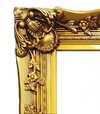
H24-GOLD $30
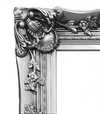
H24-SILVER $30
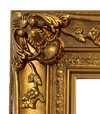
H36-GOLD $70

H36-SILVER $70
iii.
Medium
Canvas is printed with giclée inks and can be stretched or framed like a painting; paper comes flat, or framed behind glass.
Our budget print: the same image printed on a 260 g/m² polyester canvas instead of cotton, delivered rolled in a tube by regular post in 3 to 4 weeks. Rolled only (no stretcher, no frame) and no urgent production, for sizes with at least one side of 80 cm (31.5 in) or less. About 30% cheaper than the cotton canvas print.
Not available for this size: at least one side must be 80 cm (31.5 in) or less.
Rolled only: choose the canvas rolled in a tube to select this print.
Available for sizes with both sides of 110 cm (43.3 in) or less. For larger sizes the print is made on matt cotton canvas.
Matt archival canvas is not available for this size: both sides must be 110 cm (43.3 in) or less. Your print is made on matt cotton canvas instead.
Glass option is only available in size under 110 CM
iv.
Finishing
Nameplate, varnish and delivery.
Nameplate
Engraved Bronze Plaque Details
This elegant plaque features the artist's name and the title of the artwork, finely engraved for a timeless presentation.
It is made from bronze with a refined, elegant finish. The text is precisely laser-engraved for a sharp and permanent result. Measuring 9x2 cm, the plaque is compact yet easy to read. It's built to be durable and scratch-resistant, offering a professional, museum-quality look. Mounting is simple thanks to the included adhesive backing.
Transparent Acrylic Plaque Details
The plaque includes essential engraved details such as the artist's name, the title of the artwork, the date it was created, the type of media used-like oil on canvas or watercolor-a brief description of the piece, and a QR code that links to the complete artwork information.
It is crafted from clear acrylic, offering a sleek, modern appearance. The text is UV-engraved in black to ensure strong visual contrast. With a size of 10x15 cm, it ensures optimal readability. It comes equipped with two metal hooks for secure wall mounting. The plaque is designed to be weather-resistant, making it suitable for various environments, and it includes interactive features that work seamlessly with smartphone scanning.
Black Acrylic Plaque Details
This elegant plaque includes engraved information such as the artist's name, the title of the artwork, the date it was created, the type of media used (like oil on canvas or watercolor), a short description of the artwork, and a QR code for quick access to more information.
The plaque itself is made from refined black acrylic with a premium finish. The text is laser-engraved in white for high contrast and readability. Its size is 10x15 cm, designed to be easy to read. It comes with two metal hooks for professional mounting. The design is sleek and fits any interior style. It is also weather-resistant and durable, with built-in digital integration for mobile compatibility.
Protective Varnish
Urgent Production
Worldwide Delivery () in 2 weeks instead of standard 4/5 weeks. (16 December)
Urgent production and express courier are not available with the Economy poly-canvas print, which travels by regular post.
- Free Worldwide Shipping in 3 to 4 Weeks
- High-Quality Linen Canvas
- Full Shipping Insurance
- Customs Tax Refund Guarantee
- True Color Matching Guarantee
- 100-day returns, money back
- 100% Money-Back Guarantee
- Bulk Discount Offer


Quick facts and art quiz
Related Articles

25 Essential Works by Sebastiano del Piombo: A Visual Guide
Explore 25 iconic works by Sebastiano del Piombo. Trace his High Renaissance journey and explore the full collection online at WikiOO.org.

25 Essential Works by Gentile da Fabriano: A Visual Guide to the International Gothic Icon
Explore 25 iconic works by Gentile da Fabriano. Discover International Gothic gems and curated art ideas on WikiOO.org.
Related Artworks


