Reference list · Cubist

Famous Cubist Painters: Ranked List of 47

Pablo Picasso (1881–1973) is the most famous Cubist painter in this list; notable works include Guernica and The Old Guitarist. Ranks 2 to 5: Georges Braque, Fernand Léger, Juan Gris and Robert Delaunay. The list records 47 painters born between 1858 (Carl Newman) and 1939 (Dia al-Azzawi) in 20 countries.

Method. Scope: artists whose works the encyclopedia records under Cubist. Ranking: the encyclopedia's fame ranking of artists. Artists born after 1955 without a Wikidata identifier are excluded pending verification. Wikipedia: number of the encyclopedia's 32 languages with an article on the artist.

  1. Guernica by Pablo Picasso1Pablo Picasso
  2. Houses At L'estaque by Georges Braque2Georges Braque
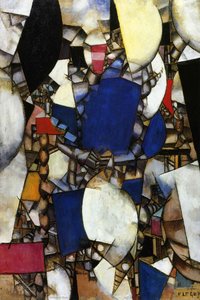
  3. Nudes in the Forest by Fernand Léger3Fernand Léger

Summary

Cubist: summary

  • 47Artists
  • 1858–1939Years of birth
  • 20Countries of birth
  • 4Women
  • 1Living artists
  • 7,389Works in our catalogue
Cities with most births
New York City (2), London (2), Málaga (1), Argenteuil (1)

Entries

Ranked entries: 47 Cubist Painters

1of 47

Pablo Picasso

Spanish Born: Málaga Cubism, Surrealism Wikipedia: 32/32 languages

Pablo Picasso

This massive, fifty-foot structure, which he suggested represented the head of his Afghan Hound, Kabul, transformed the urban landscape of Daley Plaza. The ripples of his creative life reached far beyond the walls of his studios in Paris and the South of France.

Collections To walk through the halls of the Musée Picasso in Paris is to enter a sanctuary where the artist's restless spirit remains palpable.

Notable works · 100 notable works

2of 47

Georges Braque

French Born: Argenteuil ['Fauvism', 'Cubism', 'Analytical Cubism', 'Synthetic Cubism'] Wikipedia: 31/32 languages

Georges Braque

Clarinet and Bottle of Rum on the Mantlepiece (1912). The early years of Braque's career were shaped by the lingering shadows of Impressionism and Post-Impressionism.

Notable works · 100 notable works

3of 47

Fernand Léger

French Born: Argentan ['Cubism', 'Tubism', "Section d'Or", 'Purism', 'Dadaism', 'Constructivism'] Wikipedia: 27/32 languages

Fernand Léger

His brush moved with a rhythmic, almost industrial precision, seeking to capture the pulse of a changing era. Alongside Jean Metzinger and Henri Le Fauconnier, he explored the mathematical and structural possibilities of this new language.

Collections To encounter the physical presence of his vision, one might travel to the south of France, specifically to Biot in the Alpes-Maritimes.

Notable works · 100 notable works

4of 47

Juan Gris

Spanish Born: Madrid Cubism, Synthetic Cubism, Analytical Cubism Wikipedia: 31/32 languages

Juan Gris

In many of his works, he moves away from the chaotic, shattering abstraction seen in earlier Cubism, opting instead for a more organized and legible structure. His work grew from the foundations laid by Paul Cézanne, specifically the way the older painter explored the underlying structure of form and space.

Collections Tracing the physical presence of his work requires a trip through several major collections.

Notable works · 100 notable works

5of 47

Robert Delaunay

French Born: Paris Orphism, Cubism Wikipedia: 27/32 languages

Robert Delaunay

Simultaneous Contrasts: Sun and Moon, exemplifies this approach, showcasing Delaunay’s masterful manipulation of color to convey a sense of energy and movement. This belief informed his series of paintings depicting the Eiffel Tower, where he deconstructed the iconic structure into a network of intersecting planes and vibrant hues.

Teacher of Lyonel Feininger #7

Notable works · 100 notable works

6of 47

Vladimir Tatlin

Ukrainian/Russian Born: Moscow Constructivism Wikipedia: 26/32 languages

Vladimir Tatlin

Vladimir Yevgrafovich Tatlin, born in Kharkiv, Ukraine in 1885, was more than just an artist; he was a philosophical architect of a new world order, a pivotal figure who shattered the conventions of early 20th-century art and laid the foundations for Constructivism. The ripples of his ideas were felt in Germany’s Bauhaus school, where similar explorations of form, function, and materials took place, as well as in various other forms of modern design.

Notable works · 100 notable works

7of 47

Lyonel Feininger

German-American Born: New York City Expressionism, Cubism Wikipedia: 23/32 languages

Lyonel Feininger

Notable Works: Some of his significant works include " Werder I " (watercolor), " Gaberndorf II " (paper), and " Boats " (cubism, oil on canvas). First Solo Exhibition: His first solo exhibition at the Sturm Gallery in Berlin (1917) was a pivotal moment, establishing him as a prominent figure in the art world.

Student of Robert Delaunay #5

Notable works · 100 notable works

8of 47

Gino Severini

Italian Born: Cortona Futurism, Cubism Wikipedia: 19/32 languages

Gino Severini

These formative years laid the essential groundwork for Severini’s eventual embrace of Futurism, igniting within him a desire to capture the dynamism of modern life. The years following the First World War saw Severini continuing to experiment with diverse artistic media, including mosaic and fresco, expanding his creative horizons beyond the canvas.

Notable works · 100 notable works

9of 47

Alexander Archipenko

Ukrainian-American Born: Kyiv Cubism, Avant-Garde Wikipedia: 30/32 languages

Alexander Archipenko

Family Life (1912), an early example of his Cubist approach to the human form, showcases fragmented planes and abstracted figures, capturing a sense of domestic intimacy through geometric deconstruction. His election to the American Academy of Arts and Letters in 1962 served as a formal recognition of his significant contribution to art history.

Notable works · 100 notable works

10of 47

Jacques Lipchitz

Lithuanian-French-American Born: Druskininkai Cubism, Crystal Cubism Wikipedia: 17/32 languages

Jacques Lipchitz

With the invaluable assistance of American journalist Varian Fry in Marseille, he escaped to the United States, eventually settling in New York City and later Hastings-on-Hudson. Harvard Arnason and published in 1972 alongside an exhibition at the Metropolitan Museum of Art, offered a poignant reflection on his life and artistic journey.

Notable works · 100 notable works

11of 47

Ben Nicholson

British Born: Buckinghamshire ['Abstract art', 'Cubism', 'Constructivism'] Wikipedia: 13/32 languages

Ben Nicholson

Nicholson formally studied at the Slade School of Fine Art (1910-1911), where he was a contemporary of notable artists like Paul Nash, Stanley Spencer, Mark Gertler, and Edward Wadsworth. Key Movements: Nicholson became involved with several important art movements of the time, including the Seven and Five Society (of which he was chair), Unit One, and Abstraction-Création.

Notable works · 100 notable works

13of 47

Olga Rozanova

Russian Born: Melenki ['Suprematism', 'Cubo-Futurism', 'Neo-Primitivism'] Wikipedia: 17/32 languages

Olga Rozanova

Born in 1886 in Melenki, Russia, to a family steeped in both civic duty – her father was a district police officer – and religious tradition through her Orthodox priest grandfather, Rozanova’s path diverged from convention as she pursued the burgeoning world of modern art in Moscow. Sadly, Rozanova’s promising career was cut short by illness; she succumbed to diphtheria in Moscow in 1918 at just thirty-two years old.

Notable works · 100 notable works

14of 47

Jean Metzinger

French Born: Nantes ['Neo-Impressionism', 'Fauvism', 'Cubism', 'Crystal Cubism'] Wikipedia: 22/32 languages

Jean Metzinger

Early Influences: Metzinger's early works (1900-1904) were heavily influenced by the Neo-Impressionism of Georges Seurat and Henri-Edmond Cross, evident in his use of pointillist techniques. Central Figure of Cubism: Metzinger’s significance lies in his dual role as an artist and theorist who was central to the emergence, development, and popularization of Cubism.

Notable works · 100 notable works

15of 47

Lyubov Popova

Russian Born: Krasnovidovo Avant-Garde, Constructivism Wikipedia: 19/32 languages

Lyubov Popova

A Unique Synthesis: She masterfully blended diverse artistic influences, creating a style that was both intellectually rigorous and emotionally resonant. Pioneering Spirit: Popova’s work laid the groundwork for Constructivist principles by emphasizing the relationship between art and material reality.

Notable works · 100 notable works

18of 47

Amadeo de Souza-Cardoso

Portuguese Born: Mancelos Cubism, Futurism, Modernism Wikipedia: 16/32 languages

Amadeo de Souza-Cardoso

He participated in key exhibitions, including the Salon des Indépendants and, crucially, the groundbreaking 1913 Armory Show in New York, bringing his innovative work to an international audience. Despite embracing the avant-garde spirit of Paris, he maintained a strong connection to his homeland, frequently returning to Manhufe.

Notable works · 100 notable works

19of 47

Rufino Tamayo

Mexican Born: Oaxaca de Juárez Figurative Abstraction, Surrealism Wikipedia: 16/32 languages

Rufino Tamayo

While contemporaries like Diego Rivera, José Clemente Orozco, and David Alfaro Siqueiros were consumed by creating large-scale murals brimming with overt political messages, Tamayo charted a different course. “Dos Personajes Atacados por Perros” (Two Characters Attacked by Dogs) stands as a particularly celebrated example of his Mixografia prints—a powerful and symbolic work that exemplifies the medium’s unique capabilities.

Notable works · 100 notable works

20of 47

Arthur Segal

Romanian Born: Iași ['Expressionism', 'Dadaism']

Arthur Segal

His studies at the Academy of Art in Berlin provided a solid grounding in classical techniques, but it was his exposure to the works of artists like Schmid-Reutte and Hölzel that ignited his interest in exploring new modes of representation.

Notable works · 100 notable works

22of 47

Joaquín Torres García

Uruguayan-Spanish Born: Montevideo Constructivism, Abstraction Wikipedia: 13/32 languages

Joaquín Torres García

He is widely regarded as a foundational figure in the region’s artistic development, introducing Constructivism to South America and inspiring generations of artists through his Escuela del Sur (School of the South) initiative.

Notable works · 100 notable works

23of 47

Nathan Altman

Ukrainian, Russian, Soviet Born: Vinnytsia Cubism, Cubo-Futurism, Constructivism Wikipedia: 12/32 languages

Nathan Altman

As the revolutionary fervor of the Soviet Union took hold, his work evolved to meet the demands of a new era, often blending the structural rigor of Cubism with the burgeoning aesthetics of Constructivism and later, elements of Art Deco. He enrolled at the Free Russian Academy under Vladimir Baranoff-Rossine, fostering connections with luminaries like Marc Chagall, Alexander Archipenko, and Ilya Shterenberg—artists who championed radical stylistic departures from traditional conventions.

Notable works · 100 notable works

24of 47

André Lhote

French Born: Bordeaux Cubism, Section d'Or

André Lhote

André Lhote, born in Bordeaux in 1885 and passing away in Paris in 1962, stands as a pivotal figure in the evolution of French Cubism. This institution became a breeding ground for talent, attracting a diverse cohort of students – including Henri Cartier-Bresson, Conrad O’Brien-ffrench, Elena Mumm Thornton Wilson, and many other prominent figures who would go on to make significant contributions to the art world.

Notable works · 100 notable works

25of 47

María Blanchard

Spanish Born: Santander Cubism, Expressionism Wikipedia: 14/32 languages

María Blanchard

This expressive approach distinguishes Blanchard from many of her Cubist contemporaries, revealing a deeper concern with human emotion and social commentary. Her paintings are now held in prestigious collections including the Museo Nacional Centro de Arte Reina Sofía, the Hood Museum of Art, and the Courtauld Institute of Art.

Notable works · 100 notable works

26of 47

Julio González

Spanish Born: Barcelona Cubism Wikipedia: 15/32 languages

Julio González

His life's work remains a testament to the power of tradition meeting innovation—a journey from the ancestral forge of Barcelona to the cutting edge of the Parisian avant-garde.

Notable works · 100 notable works

27of 47

Louis Marcoussis

Polish-French Born: Warsaw Cubism, School of Paris, Impressionism Wikipedia: 11/32 languages

Louis Marcoussis

Notable Works: Among his most celebrated pieces are " Interior with a Double Bass," which showcases the artist’s ability to capture the subtle nuances of musical performance; “ Concert,” depicting musicians engaged in an artistic endeavor; and numerous portraits reflecting his humanist sensibilities. He skillfully blended Impressionistic sensibilities with Cubist principles, creating artworks that transcend mere representation, inviting viewers into a realm of psychological exploration.

Notable works · 100 notable works

28of 47

Raymond Duchamp-Villon

French Born: Damville Cubism Wikipedia: 18/32 languages

Raymond Duchamp-Villon

Raymond Duchamp - Villon, born Pierre-Maurice-Raymond Duchamp in 1876 in Damville, France, stands as a pivotal figure in the dramatic shift from traditional sculpture to the dynamic language of modernism.

Notable works · 100 notable works

30of 47

Gabriel Portillo Del Toro

Mexican Cubism

Gabriel Portillo Del Toro

Beyond the individual beauty of his canvases, Gabriel Portillo del Toro’s significance lies in his role as a transitional figure in Mexican art history. In the grand tapestry of Mexican modernism, few artists managed to weave together the structural rigor of European avant-garde with the soulful warmth of regional tradition as masterfully as Gabriel Portly Del Toro.

Notable works · 100 notable works

31of 47

C. R. W. Nevinson

British Born: London Futurism, Cubism Wikipedia: 9/32 languages

C. R. W. Nevinson

Though initially struggling to find direction, he eventually enrolled at the Slade School of Art in 1909, studying under Henry Tonks alongside future luminaries like Stanley Spencer and Mark Gertler. He is recognized as one of the most important war artists of World War I, whose innovative use of Futurist and Cubist techniques brought a new level of intensity and emotional depth to depictions of conflict.

Notable works · 100 notable works

32of 47

Alfred Maurer

Born: New York City Wikipedia: 9/32 languages

Alfred Maurer

It garnered first prize at the prestigious Carnegie International Exhibition, establishing Maurer as a rising talent. In 1897, Maurer embarked on a pivotal journey to Paris, where he spent four years immersed in the vibrant art scene.

Notable works · 100 notable works

33of 47

Dia al-Azzawi

Iraqi Born: Baghdad Hurufiyya, Abstract Expressionism

Dia al-Azzawi

He quickly gravitated toward an innovative style that boldly integrated Arabic calligraphy into his compositions. Though he now resides in London, he remains a vital voice in contemporary art, continuing to advocate for Arab artistic expression on a global stage.

Notable works · 100 notable works

34of 47

Emilio Pettoruti

Argentine Born: La Plata ['Cubism', 'Futurism', 'Constructivism'] Wikipedia: 8/32 languages

Emilio Pettoruti

Mentorship with Emilio Coutaret: He studied caricature portraits under architect and drawing instructor Emilio Coutaret at the Museum of Natural History's drawing school. Der Sturm Gallery: Exhibiting at Herwarth Walden's Der Sturm gallery in Berlin exposed him to a wider range of European avant-garde art.

Notable works · 100 notable works

35of 47

Aurelio Arteta Errasti

Spanish Born: Bilbao ['Symbolism', 'Cubism', 'Social Realism'] Wikipedia: 5/32 languages

Aurelio Arteta Errasti

Aurelio Arteta Errasti, born in the bustling port city of Bilbao, Spain, in 1879, emerged as a pivotal figure in early 20th-century Spanish Modernism. The allure of Paris beckoned Arteta, and between 1902 and 1906, he immersed himself in the heart of the European avant-garde.

Notable works · 100 notable works

37of 47

Lajos Vajda

Hungarian Born: Zalaegerszeg Avant-garde, Cubism, Surrealism Wikipedia: 7/32 languages

Lajos Vajda

His artistic journey began under the rigorous tutelage of István Csók at the Hungarian Academy of Fine Arts in Budapest, a period that established his foundational mastery of composition. Cultural Preservation: His vital role in documenting and elevating Hungarian and Jewish cultural motifs within high art.

Notable works · 100 notable works

39of 47

William Roberts

British Born: London English Cubism Wikipedia: 6/32 languages

William Roberts

In works such as Munitions Factory, one can witness his mastery of the Cubist technique applied to the heavy, rhythmic atmosphere of wartime production, using geometric forms to convey the relentless momentum of industry. Throughout his long career, which spanned until 1980, Roberts earned prestigious recognition, including frequent exhibitions at the Royal Academy.

Notable works · 100 notable works

40of 47

Vilhelm Lundstrøm

Norwegian Born: Sundby ['Symbolism', 'Expressionism'] Wikipedia: 4/32 languages

Vilhelm Lundstrøm

lundstrøm's artistic journey began at the royal danish academy of art, where he studied under the guidance of rostrup böyesen. this foundational period laid the groundwork for his future explorations in cubism and modern art.

Notable works · 100 notable works

41of 47

William Dobell

Born: Cooks Hill Wikipedia: 6/32 languages

William Dobell

Gillies’ artistic journey began with an exploration of Cubism after studying under André Lhote in Paris (1923) and traveling to Italy (1924).

Notable works · 100 notable works

42of 47

Karl Knaths

American Born: Eau Claire Cubism, Modernism Wikipedia: 3/32 languages

Karl Knaths

Further experience as a scenery painter with the Wisconsin Players honed his skills in design and composition, while a move to Provincetown, Massachusetts, in 1919 proved decisive. Gale facilitated an introduction to Dudley Crafts Watson at the Milwaukee Art Institute, providing Knaths with formal training and setting him on a course toward professional artistry.

Notable works · 100 notable works

44of 47

Franco Gentilini

Italian Born: Faenza Roman School; Archaic Style Wikipedia: 5/32 languages

Franco Gentilini

Frescoes & Decorative Art: Beyond painting, Gentilini excelled as a fresco artist, contributing to monumental murals that showcased his mastery of color and form on a grand scale. The city’s governing body purchased one of his paintings during the 2nd Quadriennale Nazionale d’Arte, recognizing its artistic merit and cementing Gentilini's place as a cornerstone of Roman modernist art.

Notable works · 100 notable works

46of 47

Cliff Rowe

British Socialist Realism; New Realism Wikipedia: 1/32 languages

Cliff Rowe

His early years were defined by a dual education: the formal training at the Wimbledon School of Art and the Royal College of Art, which sharpened his technical draughtsmanship, and the raw, lived experience of London’s streets, which forged his political soul.

Notable works · 100 notable works

47of 47

Emilio Tadini

Spanish Born: Milan Catalan Modernisme Wikipedia: 1/32 languages

Emilio Tadini

Emilio Tadini was far more than a painter; he was a profound architect of meaning within the Italian cultural landscape. Born in Milan in 1927, his journey began not with a brush, but with the written word. A poet, novelist, and essayist, Tadini first emerged onto the prestigious literary stage in 1947 through Elio Vittorini's magazine, Politecnico.

Notable works · 100 notable works

Notable works

Notable Cubist works

  1. Guernica by Pablo Picasso

    Guernica

    Pablo Picasso

    1937 · Museo Nacional Centro de Arte Reina Sofía, Madrid

  2. Houses At L'estaque by Georges Braque

    Houses At L'estaque

    Georges Braque

  3. Nudes in the Forest by Fernand Léger

    Nudes in the Forest

    Fernand Léger

    1910 · Kröller-Müller Museum, Otterlo

  4. Still Life with Flowers by Juan Gris

    Still Life with Flowers

    Juan Gris

    1912 · MOMA - Museum of Modern Art, New York City

  5. Eiffel Tower by Robert Delaunay

    Eiffel Tower

    Robert Delaunay

    1914 · Solomon R. Guggenheim Museum, New York City

  6. Artist's model by Vladimir Tatlin

    Artist's model

    Vladimir Tatlin

    1910

  7. The honeymooners by Lyonel Feininger

    The honeymooners

    Lyonel Feininger

Chronology

Chronology of notable works

  1. 1900
  2. 1910
  3. 1910
  4. 1910
  5. 1911
  6. 1911
  7. 1912
  8. 1912
  9. 1913
  10. 1913
  11. 1914
  12. 1914
  13. 1914
  14. 1915

Statistics

Statistics

Index

List of 47 Cubist painters

  1. 1Pablo PicassoPablo PicassoSpanish · 1881–1973
  2. 2Georges BraqueGeorges BraqueFrench · 1882–1963
  3. 3Fernand LégerFernand LégerFrench · 1881–1955
  4. 4Juan GrisJuan GrisSpanish · 1887–1927
  5. 5Robert DelaunayRobert DelaunayFrench · 1885–1941
  6. 6Vladimir TatlinVladimir TatlinUkrainian/Russian · 1885–1953
  7. 7Lyonel FeiningerLyonel FeiningerGerman-American · 1871–1956
  8. 8Gino SeveriniGino SeveriniItalian · 1883–1966
  9. 9Alexander ArchipenkoAlexander ArchipenkoUkrainian-American · 1887–1964
  10. 10Jacques LipchitzJacques LipchitzLithuanian-French-American · 1891–1973
  11. 11Ben NicholsonBen NicholsonBritish · 1894–1982
  12. 12Marie LaurencinMarie LaurencinFrench · 1883–1956
  13. 13Olga RozanovaOlga RozanovaRussian · 1886–1918
  14. 14Jean MetzingerJean MetzingerFrench · 1883–1956
  15. 15Lyubov PopovaLyubov PopovaRussian · 1889–1924
  16. 16Carl NewmanCarl NewmanAmerican · 1858–1932
  17. 17Roger de La FresnayeRoger de La FresnayeFrench · 1885–1925
  18. 18Amadeo de Souza-CardosoAmadeo de Souza-CardosoPortuguese · 1887–1918
  19. 19Rufino TamayoRufino TamayoMexican · 1899–1990
  20. 20Arthur SegalArthur SegalRomanian · 1875–1944
  21. 21Max WeberMax WeberAmerican · 1881–1961
  22. 22Joaquín Torres GarcíaJoaquín Torres GarcíaUruguayan-Spanish · 1874–1949
  23. 23Nathan AltmanNathan AltmanUkrainian, Russian, Soviet · 1889–1970
  24. 24André LhoteAndré LhoteFrench · 1885–1962
  25. 25María BlanchardMaría BlanchardSpanish · 1881–1932
  26. 26Julio GonzálezJulio GonzálezSpanish · 1876–1942
  27. 27Louis MarcoussisLouis MarcoussisPolish-French · 1878–1941
  28. 28Raymond Duchamp-VillonRaymond Duchamp-VillonFrench · 1876–1918
  29. 29Armand SchonbergerArmand SchonbergerFrench · 1885–1974
  30. 30Gabriel Portillo Del ToroGabriel Portillo Del ToroMexican · 1927–2013
  31. 31C. R. W. NevinsonC. R. W. NevinsonBritish · 1889–1946
  32. 32Alfred MaurerAlfred Maurer1868–1932
  33. 33Dia al-AzzawiDia al-AzzawiIraqi · born 1939
  34. 34Emilio PettorutiEmilio PettorutiArgentine · 1892–1971
  35. 35Aurelio Arteta ErrastiAurelio Arteta ErrastiSpanish · 1879–1940
  36. 36Morris KantorMorris KantorRussian · 1896–1974
  37. 37Lajos VajdaLajos VajdaHungarian · 1908–1941
  38. 38István FarkasIstván FarkasHungarian · 1887–1944
  39. 39William RobertsWilliam RobertsBritish · 1895–1980
  40. 40Vilhelm LundstrømVilhelm LundstrømNorwegian · 1893–1950
  41. 41William DobellWilliam Dobell1899–1970
  42. 42Karl KnathsKarl KnathsAmerican · 1891–1971
  43. 43Nikos Hadjikyriakos-GhikasNikos Hadjikyriakos-GhikasGreek · 1906–1994
  44. 44Franco GentiliniFranco GentiliniItalian · 1909–1981
  45. 45Robert ColquhounRobert ColquhounScottish · 1914–1962
  46. 46Cliff RoweCliff RoweBritish · 1904–1988
  47. 47Emilio TadiniEmilio TadiniSpanish · 1927–2002

FAQ

Frequently asked questions

  • Who is the most famous Cubist painter?

    Pablo Picasso (#1) is first in this ranking, followed by Georges Braque (#2) and Fernand Léger (#3).

  • Which five Cubist painters should everyone know?

  • Which techniques define Cubist art?

    “Under his father's watchful and disciplined eye, the boy learned the fundamentals of figure drawing and the complexities of oil painting, mastering the ability to copy the old masters and study the forms of plaster casts.” — from our biography of Pablo Picasso (#1).

  • Which city produced the most Cubist painters?

    New York City: 2 of the painters in this list were born there.

  • Who was the earliest Cubist painter?

    The earliest-born painter in this list is Carl Newman (#16), born in 1858.

  • Who are the great Cubist painters of Spain?

    The highest-ranked painters born in Spain are Pablo Picasso (#1), Juan Gris (#4), María Blanchard (#25), Julio González (#26) and Aurelio Arteta Errasti (#35).

  • Who are the great Cubist painters of France?

    The highest-ranked painters born in France are Georges Braque (#2), Fernand Léger (#3), Robert Delaunay (#5), Marie Laurencin (#12) and Jean Metzinger (#14).

  • Which women Cubist painters are the most famous?

    4 women are in this ranking: Marie Laurencin (#12), Olga Rozanova (#13), Lyubov Popova (#15) and María Blanchard (#25).

  • When were most Cubist painters born?

    Most painters in this list were born in the 1880s (21 of 47), between 1858 and 1939 overall.

  • Who are the most famous living Cubist painters?

    The highest-ranked living painters in this list are Dia al-Azzawi (#33).

  • Which country produced the most Cubist painters?

    France: 8 of the 47 painters in this list were born there, then Spain (5) and United Kingdom (5).

  • How many works by these painters does the encyclopedia record?

    The encyclopedia records 7,389 works by these painters.

Articles

Encyclopedia articles

See also

Artists of other movements

See also

Artists of other periods

Famous paintings

Lists of famous paintings by movement

See also

Related lists