Reference list · Expressionist

List of 100 Famous Expressionist Painters (Ranked)

Wassily Kandinsky (1866–1944) is the most famous Expressionist painter in this list; notable works include Several Circles, Solomon R. G and Composition VIII. Ranks 2 to 5: Edvard Munch, Jean Michel Basquiat, Paul Klee and Jackson Pollock. The list records 100 painters born between 1849 (Christian Rohlfs) and 1960 (Jean Michel Basquiat) in 31 countries.

Method. Scope: artists whose works the encyclopedia records under Expressionist. Ranking: the encyclopedia's fame ranking of artists. Artists born after 1955 without a Wikidata identifier are excluded pending verification. Wikipedia: number of the encyclopedia's 32 languages with an article on the artist.

  1. Several Circles, Solomon R. G by Wassily Kandinsky1Wassily Kandinsky
  2. The Scream by Edvard Munch2Edvard Munch
  3. Untitled - Skull, (Broad Collection, LA) by Jean Michel Basquiat3Jean Michel Basquiat

Summary

Expressionist: summary

  • 100Artists
  • 1849–1960Years of birth
  • 31Countries of birth
  • 10Women
  • 6Living artists
  • 16,739Works in our catalogue
Cities with most births
Vienna (3), Berlin (3), New York City (3), Dresden (2)

Entries

Ranked entries: 100 Expressionist Painters

1of 100

Wassily Kandinsky

Russian Born: Moscow ['Expressionism', 'Abstract painting', 'Der Blaue Reiter'] Wikipedia: 32/32 languages

Wassily Kandinsky

He sought out the Anton Ažbe School and the Academy of Fine Arts to learn the mechanics of his chosen craft.

Collections His canvases are scattered across several major institutions, inviting a close look at how his use of color and form evolved.

Notable works · 100 notable works

2of 100

Edvard Munch

Norwegian Born: Ådalsbruk ['Expressionism', 'Symbolism']

Edvard Munch

Munch did not aim to replicate the physical world as it appeared to the eye. It was there that he met the Swedish dramatist August Strindberg.

Collections The Munch Museum is the primary guardian of his legacy, housing a vast collection that spans the full range of his artistic output.

Notable works · 100 notable works

3of 100

Jean Michel Basquiat

American Born: Park Slope Neo-Expressionism Wikipedia: 29/32 languages

Jean Michel Basquiat

Paintings like Piscine versus the Best Hotels (or various loin) exemplify his ability to juxtapose seemingly disparate elements—luxury and deprivation, beauty and decay—creating a powerful commentary on social inequalities. In the years since his death, Basquiat’s reputation has only grown.

Notable works · 100 notable works

4of 100

Paul Klee

German and Swiss Born: Münchenbuchsee Expressionism, Cubism, Surrealism Wikipedia: 31/32 languages

Paul Klee

His approach to a canvas was rarely about simple imitation; instead, he built his compositions through a highly individual style influenced by expressionism, cubism, and surrealism.

Collections To find the traces of his prolific output, one might travel to Bern, Switzerland.

Notable works · 100 notable works

5of 100

Jackson Pollock

American Born: Cody Abstract Expressionism Wikipedia: 31/32 languages

Jackson Pollock

By 1947, a profound shift had taken hold in the way he approached the canvas. He was among the first American painters to be recognized as a peer of the great 20th-century European masters, proving that a new, visceral language could emerge from the soil of the United States.

Collections In New York City, the Museum of Modern Art holds several of his canvases, allowing viewers to stand before the sprawling, uncentered compositions that defined his era.

Notable works · 100 notable works

6of 100

Amedeo Modigliani

Italian Born: Livorno Expressionism Wikipedia: 32/32 languages

Amedeo Modigliani

In 1907, he also attended the Paul Gauguin retrospective at the Salon d'Automne, an event that left a mark on his developing vision.

Collections In the United States, the Metropolitan Museum of Art in New York holds significant pieces, including a portrait of Jeanne Hebuterne from 1918.

Notable works · 100 notable works

7of 100

Egon Schiele

Austrian Born: Tulln an der Donau Austrian Expressionism Wikipedia: 32/32 languages

Egon Schiele

By 1909, he is actively challenging the established order, co-founding the Neues Wiener Kunstgruppe and the Neukunstgruppe. Schiele emerges from the early 20th century as a leading figure in Austrian Expressionism.

Collections The weight of Schiele’s output is felt most heavily in Vienna.

Notable works · 100 notable works

9of 100

Gerhard Richter

German Born: Dresden Wikipedia: 28/32 languages

Gerhard Richter

From 1957 to 1961, he remains within the academy's structure, working as a master trainee. His canvases have moved from the experimental spaces of Düsseldorf to the permanent collections of the Museum of Modern Art in New York.

Collections The physical presence of Richter’s practice spans major institutional collections across Europe.

Notable works · 100 notable works

10of 100

Willem de Kooning

Dutch-American Born: Rotterdam Abstract Expressionism Wikipedia: 30/32 languages

Willem de Kooning

From his teenage years until 1924, he attends these classes in Rotterdam, balancing the demands of work with the study of formal art. He moves through a landscape of ideas, absorbing the influence of Stuart Davis and John Graham, whose presence helps steer his vocabulary away from literal depiction.

Notable works · 100 notable works

12of 100

Mark Rothko

American Born: Daugavpils ['Color Field painting', 'Abstract Expressionism']

Mark Rothko

By 1940, he made the decision to change his name to Mark Rothko. His paintings are recognized as some of the most significant works of 20th-century art, often found in the permanent collections of major institutions like the Museum of Modern Art in New York and the Tate Modern in London.

Collections To stand before his canvases is to experience the weight of color in a quiet room.

Notable works · 100 notable works

13of 100

Franz Marc

German Born: Kreuzstraße German Expressionism Wikipedia: 31/32 languages

Franz Marc

It was in Paris that he encountered the work of Vincent van Gogh. His time in France, specifically during visits to Paris in 1903 and 1907, acted as a catalyst for this departure.

Collections The Franz Marc Museum in Kochel am See, Germany, functions as a primary site for his legacy, housing over 150 of his works.

Notable works · 100 notable works

14of 100

Oskar Kokoschka

Austrian, Czech, British Born: Pöchlarn Expressionism, Viennese Avant-Garde Wikipedia: 29/32 languages

Oskar Kokoschka

He was a leading figure of the Expressionist movement, moving away from simple visual accuracy to capture something much deeper. In 1909, he wrote the short play Murderer, the Hope of Women, which is often recognized as one of the first Expressionist dramas.

Notable works · 100 notable works

15of 100

Ernst Ludwig Kirchner

German Born: Aschaffenburg German Expressionism Wikipedia: 32/32 languages

Ernst Ludwig Kirchner

Ernst Ludwig Kirchner was born on 6 May 1880 in Aschaffenburg, Germany. Kirchner remains a central figure of the German Expressionist movement, a presence that helped define the visual language of a transformative era.

Collections The physical presence of Kirchner’s vision is scattered across several major institutions, reflecting the international reach of his influence.

Notable works · 100 notable works

16of 100

Arshile Gorky

Armenian-American Born: Dilkaya Abstract Expressionism, Surrealism Wikipedia: 24/32 languages

Arshile Gorky

Seeking a different path, he enrolled in classes at the New England School of Art. The weight of Gorky's influence on Abstract Expressionism remains heavy.

Collections To see the physical traces of his hand, one might travel to Washington, D.C.

Notable works · 100 notable works

17of 100

Emil Nolde

German-Danish Born: Nolde German Expressionism Wikipedia: 28/32 languages

Emil Nolde

His parents were Danish and Frisian peasants, and the rhythms of rural life shaped his early years. He looked toward the work of Paul Gauguin and found a way to move beyond simple representation.

Collections Tracing his presence in public collections reveals a scattered but significant trail.

Notable works · 100 notable works

18of 100

Otto Dix

German Born: Untermhaus ['Neue Sachlichkeit', 'Dadaism', 'Expressionism'] Wikipedia: 28/32 languages

Otto Dix

Dix enters an apprenticeship under the painter Carl Senff, a period of study that lasts until 1910. His presence in the permanent collections of major institutions, such as the Museum of Modern Art in New York, confirms his lasting importance.

Collections The physical presence of Dix’s vision remains scattered across major international institutions.

Notable works · 100 notable works

19of 100

James Ensor

Belgian Born: Ostend ['Symbolism', 'Expressionism'] Wikipedia: 25/32 languages

James Ensor

From 1877 to 1880, he attended the Académie Royale des Beaux-Arts in Brussels.

Collections Ensor’s presence in major international collections confirms his lasting impact on the development of modernism.

Notable works · 100 notable works

20of 100

Chaim Soutine

French Born: Smilavičy Expressionism Wikipedia: 26/32 languages

Chaim Soutine

His style was profoundly individual, a compelling synthesis of traditional European painting —particularly the Dutch Masters like Rembrandt and Chardin, and the Realism of Courbet—filtered through a lens of raw emotional intensity. While often categorized as an Expressionist, to label Soutine solely within this framework feels limiting.

Notable works · 100 notable works

21of 100

Max Beckmann

German Born: Leipzig Expressionism, New Objectivity Wikipedia: 27/32 languages

Max Beckmann

Born into a middle-class family in Leipzig, Germany, Max Beckmann showed an early inclination toward drawing. Even as he navigated the difficult years of exile in Amsterdam and his eventual move to the United States, his voice remained distinct.

Collections Finding the physical traces of Beckmann's life requires traveling through the cities that shaped his exile and his later years.

Notable works · 100 notable works

22of 100

Friedensreich Hundertwasser

Austrian Born: Vienna Organic architecture, Spiral art Wikipedia: 29/32 languages

Friedensreich Hundertwasser

Artistic Training & Rejection of Convention: He briefly attended the Academy of Fine Arts in Vienna but quickly rejected its rigid academic style. Champion of Ecological Causes: Hundertwasser was a passionate environmental activist who campaigned tirelessly for ecological awareness and sustainable practices.

Notable works · 100 notable works

23of 100

Anselm Kiefer

German Born: Donaueschingen Neo-Expressionism Wikipedia: 23/32 languages

Anselm Kiefer

As his career progressed, Kiefer’s international recognition grew through works that challenged the boundaries between painting, sculpture, and installation.

Notable works · 100 notable works

24of 100

Lucian Freud

British Born: Berlin Realism, Figurative art Wikipedia: 23/32 languages

Lucian Freud

Freud’s technical approach was integral to the emotional impact of his paintings. His paintings are held in major museums globally—the Tate in London, the Freud Museum London, and Goldsmiths’ College, University of London—enduring testaments to his artistic genius.

Notable works · 100 notable works

25of 100

Käthe Kollwitz

German Born: Königsberg Expressionism Wikipedia: 28/32 languages

Käthe Kollwitz

Käthe Kollwitz, born Käthe Schmidt on July 8, 1867, in Königsberg (now Kaliningrad, Russia), emerged from a family deeply rooted in both intellectual ferment and social conscience. She died near Dresden in 1945, during the final days of World War II, a poignant end for an artist who had dedicated her life to bearing witness to human suffering.

Notable works · 100 notable works

28of 100

David Alfaro Siqueiros

Mexican Born: Chihuahua City Social Realism, Muralism Wikipedia: 24/32 languages

David Alfaro Siqueiros

As one of the “big three” Mexican muralists – alongside Diego Rivera and José Clemente Orozco – he played an instrumental role in establishing Mexican muralism as a significant artistic movement, transforming public spaces into canvases for social commentary.

Notable works · 100 notable works

29of 100

Helen Frankenthaler

American Born: Manhattan Abstract Expressionism, Color Field Wikipedia: 19/32 languages

Helen Frankenthaler

She even ventured into theatrical design, creating sets and costumes for the Royal Ballet. Frankenthaler’s impact on the art world was recognized early in her career with inclusion in the influential “Fifteen Unknowns” exhibition in 1950 and her first solo show at Tibor de Nagy Gallery in 1951.

Student of Hans Hofmann #72

Notable works · 100 notable works

30of 100

Cy Twombly

American Born: Lexington Abstract Expressionism, Postmodern Wikipedia: 21/32 languages

Cy Twombly

His early works, such as the North African Sketchbooks (1953), already hinted at his unique blend of abstract forms and poetic references. He drew inspiration from a diverse range of sources—from the raw energy of Jean Dubuffet and Alberto Giacometti to the poetic sensibilities of Stéphane Mallarmé, Rainer Maria Rilke, and John Keats.

Student of Franz Kline #42, Robert Motherwell #41

Notable works · 100 notable works

31of 100

Lyonel Feininger

German-American Born: New York City Expressionism, Cubism Wikipedia: 23/32 languages

Lyonel Feininger

Notable Works: Some of his significant works include " Werder I " (watercolor), " Gaberndorf II " (paper), and " Boats " (cubism, oil on canvas). First Solo Exhibition: His first solo exhibition at the Sturm Gallery in Berlin (1917) was a pivotal moment, establishing him as a prominent figure in the art world.

Notable works · 100 notable works

33of 100

František Kupka

Czech Born: Opočno ['Realism', 'Symbolism', 'Orphism', 'Cubism', 'Abstraction'] Wikipedia: 24/32 languages

František Kupka

By 1906, he had settled in Puteaux, a suburb of Paris. His creative output is often viewed alongside the works of Piet Mondrian and Wassily Kandinsky, marking a shift toward a visual language that prioritized the interaction of color and shape over the depiction of the physical world.

Collections To see his canvases in person, one might travel to New York City.

Notable works · 100 notable works

34of 100

Paula Modersohn-Becker

German Born: Dresden Expressionism Wikipedia: 24/32 languages

Paula Modersohn-Becker

Born Minna Hermine Paula Becker on February 8, 1876, in Dresden, Germany, her life was tragically short – she passed away November 30, 1907, in Worpswede – yet within those three decades, she forged a path of remarkable artistic innovation and personal courage. Immersing herself in the vibrant art scene of the French capital, she encountered the works of Paul Cézanne, Paul Gauguin, Vincent van Gogh, and other Post-Impressionist masters.

Notable works · 100 notable works

35of 100

Julian Schnabel

American Born: Brooklyn Neo-Expressionism

Julian Schnabel

Yet, Schnabel persevered, participating in pivotal exhibitions such as the Venice Biennale in 1980 and ‘A New Spirit in Painting’ at the Royal Academy of Arts in 1981, solidifying his position as a leading figure in the resurgence of painting. His works are now held in major museum collections worldwide, including the Metropolitan Museum of Art, MoMA, the Whitney Museum, Tate Modern, and the Centre Pompidou—a testament to his enduring impact on contemporary art.

Notable works · 100 notable works

36of 100

Georg Baselitz

German Born: Deutschbaselitz Neo-Expressionism Wikipedia: 26/32 languages

Georg Baselitz

Throughout his prolific career, Baselitz’s artistic language has been a complex tapestry woven from myriad influences, ranging from the starkness of Socialist Realism and the dramatic tension of Mannerism to the primal rhythms of African sculpture.

Notable works · 100 notable works

37of 100

Lee Krasner

American Born: Brooklyn Abstract Expressionism Wikipedia: 17/32 languages

Lee Krasner

From her early days at Washington Irving High School for Girls, where a focused course in visual arts first ignited her creative spirit, to her rigorous training at Cooper Union’s Women's Art School, Krasner possessed a foundational discipline that would later serve as the bedrock for her most radical experiments.

Notable works · 100 notable works

38of 100

Karl Schmidt-Rottluff

German Born: Rottluff Expressionism Wikipedia: 25/32 languages

Karl Schmidt-Rottluff

Bold Lines & Stark Contrasts: Particularly evident in his woodcuts, these elements create a sense of immediacy and emotional intensity. His paintings, woodcuts, lithographs, and etchings are held in major museums worldwide, including the Museum of Modern Art (New York), the Neue Galerie (New York), and the Los Angeles County Museum of Art.

Notable works · 100 notable works

39of 100

Hans Hartung

German-French Born: Leipzig Gestural Abstract Expressionism Wikipedia: 15/32 languages

Hans Hartung

Born in 1904 in the historic city of Leipzig, Germany, Hartung’s early consciousness was shaped by a deep reverence for the masters of light and shadow. His debut exhibition in Dresden in 1931 had already signaled the arrival of a major talent, but it was his later ability to bridge the gap between European abstraction and the burgeoning American lyrical abstraction movement that cemented his historical importance.

Notable works · 100 notable works

40of 100

Frank Auerbach

British Born: Berlin School of London Wikipedia: 17/32 languages

Frank Auerbach

The 1950s saw Auerbach establishing his presence through exhibitions at the Beaux Arts Gallery in London. He represented Britain at the Venice Biennale in 1986, sharing the Golden Lion with Sigmar Polke —a testament to his international standing.

Notable works · 100 notable works

41of 100

Robert Motherwell

American Born: Aberdeen Abstract Expressionism Wikipedia: 16/32 languages

Robert Motherwell

The Surrealist Encounter: A pivotal moment arrived in 1940 when Motherwell relocated to New York City and enrolled at Columbia University under Meyer Shapiro’s guidance.

Teacher of Cy Twombly #30

Notable works · 100 notable works

42of 100

Franz Kline

American Born: Wilkes-Barre Abstract Expressionism Wikipedia: 17/32 languages

Franz Kline

De Kooning suggested projecting one of Kline’s sketches onto a wall using a Bell-Opticon projector – an act that dramatically enlarged and transformed the image, reducing it to its essential strokes. By the 1950s, Franz Kline had achieved significant recognition within the New York School—an informal group of artists including Jackson Pollock, Willem de Kooning, Robert Motherwell, and Lee Krasner who were redefining American art.

Teacher of Cy Twombly #30

Notable works · 100 notable works

44of 100

M.F. Husain

Indian Born: Pandharpur Cubist narrative paintings Wikipedia: 14/32 languages

M.F. Husain

His ability to synthesize the structural rigor of Western abstraction with the emotive richness of Eastern storytelling created a unique visual dialect that resonated across continents. Born in 1915 in the small town of Pandharpur, Maharashtra, his early years were steeped in the vibrant cultural textures of rural India.

Notable works · 100 notable works

45of 100

August Macke

German Born: Meschede Expressionism, Fauvism, Orphism, Cubism Wikipedia: 28/32 languages

August Macke

He found a way to weave the dynamism of Italian Futurism into his compositions, imbuing his scenes with a sense of movement and modern energy. This was no passing interest; he returned to Paris frequently between 1907 and 1912, allowing the atmosphere of the French capital to reshape his perception of the canvas.

Collections To walk through the rooms where his spirit remains, one might travel to Bonn, Germany.

Notable works · 100 notable works

46of 100

Alexej von Jawlensky

Russian Born: Torzhok Expressionism Wikipedia: 23/32 languages

Alexej von Jawlensky

The move to Munich in 1894 changed everything for Jawlensky. Alexej von Jawlensky left behind a body of work that helped define the direction of Expressionism.

Collections Finding the traces of Jawlensky's life requires traveling through several European cities where his presence remains felt.

Notable works · 100 notable works

47of 100

Philip Guston

Canadian-American Born: Montreal ['Abstract Expressionism', 'Neo-Expressionism'] Wikipedia: 15/32 languages

Philip Guston

Initially, his work was figurative and representational, showcasing early influences from Renaissance masters like Piero della Francesca. His father, a Ukrainian Jewish immigrant, took his own life in 1923.

Notable works · 100 notable works

48of 100

Lovis Corinth

German Born: Gvardeysk Impressionism & Expressionism Wikipedia: 24/32 languages

Lovis Corinth

His time spent studying the Old Masters, particularly Rubens, instilled in him a love of dynamic composition and expressive brushwork. He served as president of the Berlin Secession from 1915 until his death in 1925, championing progressive artistic ideas and fostering a vibrant creative community.

Notable works · 100 notable works

51of 100

Johannes Itten

Swiss Born: Wachseldorn Expressionism, Bauhaus Wikipedia: 21/32 languages

Johannes Itten

Undeterred, Itten established the “ontos weaving workshops” near Zurich in 1924, collaborating with Bauhaus weaver Gunta Stölzl. Johannes Itten, born in 1888 in the tranquil Swiss village of Südern-Linden, was more than just a painter; he was a visionary educator who fundamentally reshaped the landscape of modern art instruction.

Notable works · 100 notable works

52of 100

Stanisław Ignacy Witkiewicz

Polish Born: Warsaw Symbolism, Surrealism Wikipedia: 27/32 languages

Stanisław Ignacy Witkiewicz

Stanisław Ignacy Witkiewicz, known to most as Witkacy, remains a pivotal yet often enigmatic figure in the landscape of 20th-century art. Returning to Poland after the war, he settled in Zakopane, a mountain resort town already steeped in artistic innovation thanks to his father’s pioneering “Zakopane Style” architecture which blended local traditions with Art Nouveau influences.

Notable works · 100 notable works

53of 100

Erich Heckel

German Born: Döbeln German Expressionism Wikipedia: 22/32 languages

Erich Heckel

Influences: Heckel and the other members of Die Brücke were heavily influenced by Edvard Munch's expressive style and African sculpture, which they saw as embodying a raw, primitive power. Expressionist Pioneer: Erich Heckel is recognized as a key figure in the Expressionist movement, particularly for his contributions to Die Brücke.

Notable works · 100 notable works

55of 100

Marianne von Werefkin

Russian-German-Swiss Born: Tula Expressionism, Symbolism Wikipedia: 21/32 languages

Marianne von Werefkin

It was in Munich that Werefkin truly came into her own, becoming a central figure in a vibrant circle of artists including Wassily Kandinsky, Alexej von Jawlensky, Gabriele Münter, and Franz Marc – individuals who would collectively shape the landscape of early Expressionism. She was not merely an associate of Kandinsky and Jawlensky; she was a driving force behind the movement’s intellectual and aesthetic innovations, a pioneering theorist who fostered artistic exchange through her influential salon in Munich.

Notable works · 100 notable works

57of 100

Vilmos Aba-Novak

Hungarian Born: Budapest Modern Hungarian art Wikipedia: 18/32 languages

Vilmos Aba-Novak

Born in Budapest on March 15th, 1894, Vilmos Aba-Novák’s early life was marked by an exposure to the visual arts. His legacy extends beyond individual artworks; he helped to establish a distinctly Hungarian modern style that blended influences from Expressionism, the Italian Novecento, and his own unique artistic vision.

Notable works · 100 notable works

58of 100

Nadežda Petrović

Serbian Born: Čačak Expressionism & Fauvism Wikipedia: 27/32 languages

Nadežda Petrović

Graduating in 1891, she taught there for a period beginning in 1893 before moving to Munich to study with Slovenian artist Anton Ažbe. Studying under Anton Ažbe, a Slovenian artist who championed innovative techniques and stylistic experimentation, she absorbed influences from artists like Edvard Munch and Henri Matisse.

Notable works · 100 notable works

59of 100

Otto Mueller

German Born: Lubawka Expressionism Wikipedia: 19/32 languages

Otto Mueller

His subject matter consistently revolved around several key themes: serene landscapes often reminiscent of starry nights, expressive nudes embodying both sensuality and melancholy, and, most notably, depictions of Romani people. After the war, he accepted a professorship at the Academy of Fine Arts in Breslau, dedicating himself to teaching until his death in 1930.

Notable works · 100 notable works

60of 100

Constant Permeke

Belgian Born: Antwerp Flemish Expressionism Wikipedia: 16/32 languages

Constant Permeke

Key Characteristics: Heavy impasto, muted tonality in early works evolving to vibrant color, distorted forms, focus on working-class life.

Notable works · 100 notable works

61of 100

Jules Pascin

Born: Vidin Wikipedia: 18/32 languages

Jules Pascin

Arrival in Paris: In 1905, Pascin moved to Paris, becoming part of the vibrant artistic community. School of Paris: Pascin was a prominent figure within the School of Paris – a collective of expatriate artists who shaped modern art in the early 20th century.

Notable works · 100 notable works

62of 100

Christian Rohlfs

German Born: Groß Niendorf Expressionism Wikipedia: 15/32 languages

Christian Rohlfs

Notable works like “ Hilly Landscape in Late Autumn ” (1900) demonstrate an early sensitivity to atmospheric effects and a growing willingness to depart from strict realism. Christian Rohlfs occupies a significant position in the history of German Expressionism, though his journey to its core principles was gradual and deeply personal.

Notable works · 100 notable works

64of 100

Ossip Zadkine

Russian-French Born: Vitebsk Cubism, Modernism Wikipedia: 23/32 languages

Ossip Zadkine

Initially, Zadkine embraced Cubism from 1914 to 1925, demonstrating a clear understanding of its principles in his early works. The Musée Zadkine in Paris, housed in his former home and studio, and another in Les Arques, preserve and showcase his extensive body of work, ensuring that his legacy continues to inspire future generations.

Notable works · 100 notable works

65of 100

Clyfford Still

American Born: Grandin Abstract Expressionism Wikipedia: 12/32 languages

Clyfford Still

The transformation from representational work to the radical abstraction for which Still is celebrated occurred between 1938 and 1942, a period of intense experimentation and self-discovery. Perhaps one of his most significant legacies is The Clyfford Still Museum in Denver, Colorado, which houses an extraordinary collection of over 3,125 works – representing 93 percent of his lifetime output and complete archives.

Notable works · 100 notable works

66of 100

Richard Gerstl

Austrian Born: Vienna Expressionism Wikipedia: 15/32 languages

Richard Gerstl

After struggling in the traditional Viennese Piaristengymnasium and being expelled for disciplinary issues, Gerstl received private tutoring while pursuing his artistic ambitions. Summers spent under Simon Hollósy in Nagybánya exposed him to more liberal artistic approaches.

Notable works · 100 notable works

67of 100

Richard Diebenkorn

American Born: Portland ['Abstract Expressionism', 'Bay Area Figurative', 'Lyrical Abstraction'] Wikipedia: 9/32 languages

Richard Diebenkorn

Richard Diebenkorn, born in Portland, Oregon, in 1922, embarked on a journey that would establish him as one of the most significant American painters of the postwar era. A significant retrospective at the Pasadena Art Museum in 1960—later shown at the California Palace of the Legion of Honor in San Francisco—cemented his reputation as a leading figure in the art world.

Notable works · 100 notable works

68of 100

John Marin

American Born: Rutherford Modernism, Watercolor Wikipedia: 16/32 languages

John Marin

John Marin, born in Rutherford, New Jersey, on December 23, 1870, experienced a childhood marked by early loss. His travels extended beyond France, encompassing the Netherlands, Belgium, England, and Italy, each locale contributing to a distinctive watercolor technique characterized by an interplay of abstract ambience, transparency, opacity, and dynamic linear elements.

Notable works · 100 notable works

69of 100

Charles Henry Sims

British Born: Islington Outsider art, Impressionism

Charles Henry Sims

He quickly gained recognition, exhibiting at the Royal Academy from 1894 onwards and becoming a sought-after portraitist among London society. Institutions like the Tate Gallery, the British Museum, and English Heritage hold examples of his work, ensuring his legacy endures.

Notable works · 100 notable works

70of 100

Yannis Tsarouchis

Greek Born: Piraeus Surrealism

Yannis Tsarouchis

He studied at the Athens School of Fine Arts, absorbing influences from Impressionism and Symbolism before gravitating towards Surrealism in the mid-1930s. Despite remaining largely outside the mainstream art world during his lifetime, Yiannis Tsaroychis’s work continues to inspire admiration for its imaginative vision and technical prowess.

Notable works · 100 notable works

71of 100

Aaron Siskind

American Born: New York Abstract Expressionism

Aaron Siskind

Aaron Siskind, born in the vibrant heart of New York City in 1903, stands as a pivotal figure in American photography—a bridge between the documentary impulse and the burgeoning world of Abstract Expressionism. He spent two decades at the Illinois Institute of Technology (1951-1970), shaping the minds of aspiring photographers at its Institute of Design, and continued his teaching career at the Rhode Island School of Design (1971-1976) alongside Harry Callahan.

Notable works · 100 notable works

73of 100

Arthur Segal

Romanian Born: Iași ['Expressionism', 'Dadaism']

Arthur Segal

His studies at the Academy of Art in Berlin provided a solid grounding in classical techniques, but it was his exposure to the works of artists like Schmid-Reutte and Hölzel that ignited his interest in exploring new modes of representation.

Notable works · 100 notable works

75of 100

Adolph Gottlieb

American Born: New York City Abstract Expressionism Wikipedia: 12/32 languages

Adolph Gottlieb

A crucial moment arrived in 1935 when Gottlieb joined forces with artists like Mark Rothko and John D. His work is now represented in major museum collections worldwide, including the Museum of Modern Art (MoMA) in New York City and the Tate Modern in London—a testament to its enduring power and influence.

Notable works · 100 notable works

76of 100

Jean-Paul Riopelle

Canadian Born: Montreal Lyrical Abstraction Wikipedia: 14/32 languages

Jean-Paul Riopelle

Shift from Surrealism: After a brief association with the Surrealists, Riopelle moved towards Lyrical Abstraction, a style related to Abstract Expressionism. Riopelle was the first Canadian painter since James Wilson Morrice to achieve widespread international recognition.

Notable works · 100 notable works

77of 100

Gabriele Münter

German Born: Berlin Expressionism Wikipedia: 18/32 languages

Gabriele Münter

Born in Berlin in 1877 into an upper-middle-class family, Münter navigated a world that presented significant obstacles for women pursuing artistic careers. She joined his Phalanx school in 1901, where she absorbed the principles of Post-Impressionism and experimented with innovative techniques like using palette knives to apply paint—a method that would become a hallmark of her style.

Student of Wassily Kandinsky #1

Notable works · 100 notable works

78of 100

Yoo Youngkuk

Korean Born: Ulchin Abstract painting

Yoo Youngkuk

Following his participation in the São Paulo Biennial in 1963, Yoo experienced a period of artistic consolidation, withdrawing from group activities to focus on solo exhibitions held every other year for two decades. Exploring Yoo Youngkuk's masterpieces – such as “ Mountain ” or “ Work ”– at platforms like AllPaintingsStore.com offers a glimpse into the mind of a true pioneer, an artist who dared to break with tradition and forge a new path for Korean art.

Notable works · 100 notable works

79of 100

Wojciech Weiss

Polish Born: Leorda Expressionism Wikipedia: 11/32 languages

Wojciech Weiss

Weiss's distinctive style is characterized by intense emotion conveyed through muted color palettes and dynamic brushstrokes—a hallmark of Expressionism. Furthermore, he engaged with Symbolist artists such as Edvard Munch and Gustav Klimt, incorporating evocative imagery and psychological depth into his compositions.

Notable works · 100 notable works

80of 100

Ad Reinhardt

American Born: Buffalo Abstract Expressionism, Minimalism Wikipedia: 12/32 languages

Ad Reinhardt

Even his involvement in protests – against MoMA in the 1940s, with “The Irascibles” against the Metropolitan Museum of Art in the 1950s, and through a lithograph for Artists and Writers Protest Against the Vietnam War in 1967—demonstrated a commitment to artistic freedom and social responsibility.

Notable works · 100 notable works

82of 100

Max Kurzweil

Austrian Born: Bzenec Vienna Secession Wikipedia: 13/32 languages

Max Kurzweil

Under the rigorous academic guidance of masters such as Christian Griepenkerl and Leopold Carl Müller at the Academy of Fine Arts Vienna, Kurzweil mastered the classical foundations of his craft. This internal struggle reached its devastating conclusion in 1916, when he ended his life alongside his student and lover, Helene Heger.

Notable works · 100 notable works

84of 100

Heinrich Campendonk

German/Dutch Born: Krefeld Der Blaue Reiter Wikipedia: 13/32 languages

Heinrich Campendonk

The Blaue Reiter’s emphasis on symbolism, spirituality, and the connection between art and nature profoundly impacted Campendonk's work, leading him to incorporate elements of folklore, mythology, and dream imagery into his compositions.

Notable works · 100 notable works

86of 100

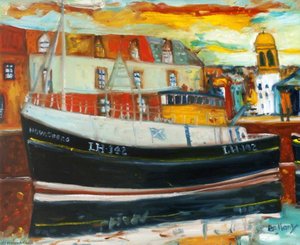
John Bellany

Scottish Expressionism; Surrealism

John Bellany

Born in 1942 amidst the salt-sprayed fishing traditions of Port Seton, near Edinburgh, John Bellany CBE, RA emerged as one of Scotland’s most profound and evocative visual storytellers. John Bellany’s contribution to British art history is marked by his ability to elevate regional Scottish identity to a universal stage.

Notable works · 100 notable works

89of 100

Paul Jenkins

American Born: Kansas City Abstract Expressionism

Paul Jenkins

His technique involved: Layered Pigmentation: The meticulous application of thin, translucent washes that create a sense of infinite depth. In the intellectual and creative crucible of both New York and Paris, Jenkins navigated the dynamic currents of mid-century modernism, establishing a studio practice that would redefine the boundaries of the medium through his revolutionary "phenomena" technique.

Notable works · 100 notable works

90of 100

Kerry James Marshall

American Born: Birmingham Neo-Expressionism Wikipedia: 8/32 languages

Kerry James Marshall

Growing up in South Central Los Angeles, near the headquarters of the Black Panther Party, Marshall was immersed in an environment where social responsibility and visual identity were inextricably linked. The historical significance of Kerry James Marshall lies in his ability to disrupt visual hierarchies.

Notable works · 100 notable works

95of 100

Frits Van Den Berghe

Belgian Born: Ghent Expressionism, Surrealism Wikipedia: 10/32 languages

Frits Van Den Berghe

Frits Van den Berghe died in Ghent in 1939, leaving behind a rich and complex body of work that continues to captivate viewers with its haunting beauty and psychological depth. Initially, he benefited from the rigorous training provided by Jean Delvin at the Royal Academy, grounding him in classical techniques and compositional principles.

Notable works · 100 notable works

99of 100

Mstislav Dobuzhinsky

Russian-Lithuanian Born: Novgorod Expressionism, Cityscapes

Mstislav Dobuzhinsky

Mstislav Valerianovich Dobuzhinsky (1875-1957), a name perhaps less familiar than some of his contemporaries, remains a profoundly evocative figure in the history of Russian art. Mstislav Dobuzhinsky’s work holds significant historical importance as a document of early 20th-century Russia.

Notable works · 100 notable works

100of 100

Heinrich Nauen

German Born: Krefeld Expressionism Wikipedia: 10/32 languages

Heinrich Nauen

However, it was his subsequent studies at the Staatliche Akademie der Bildenden Künste Stuttgart from 1900 to 1902 that truly ignited his artistic fire. While Nauen’s work predates the formal establishment of German Expressionism, it undeniably shares many key characteristics with the movement.

Notable works · 100 notable works

Notable works

Notable Expressionist works

  1. Several Circles, Solomon R. G by Wassily Kandinsky

    Several Circles, Solomon R. G

    Wassily Kandinsky

    1926 · Solomon R. Guggenheim Museum, New York City

  2. The Scream by Edvard Munch

    The Scream

    Edvard Munch

    1893 · Nasjonalgalleriet, Oslo

  3. Untitled - Skull, (Broad Collection, LA) by Jean Michel Basquiat

    Untitled - Skull, (Broad Collection, LA)

    Jean Michel Basquiat

    1981

  4. Woman Knitting by Paul Klee

    Woman Knitting

    Paul Klee

    1915 · Boca Raton Museum of Art

  5. One. Number 31, 1950 by Jackson Pollock

    One. Number 31, 1950

    Jackson Pollock

  6. Nude Bust by Amedeo Modigliani

    Nude Bust

    Amedeo Modigliani

    1915

  7. Couple Embracing by Egon Schiele

    Couple Embracing

    Egon Schiele

Chronology

Chronology of notable works

  1. 1887
  2. 1893
  3. 1908
  4. 1911
  5. 1911
  6. 1915
  7. 1915
  8. 1917
  9. 1919
  10. 1926
  11. 1933
  12. 1936
  13. 1944
  14. 1949

Statistics

Statistics

Index

List of 100 Expressionist painters

  1. 1Wassily KandinskyWassily KandinskyRussian · 1866–1944
  2. 2Edvard MunchEdvard MunchNorwegian · 1863–1944
  3. 3Jean Michel BasquiatJean Michel BasquiatAmerican · 1960–1988
  4. 4Paul KleePaul KleeGerman and Swiss · 1879–1940
  5. 5Jackson PollockJackson PollockAmerican · 1912–1956
  6. 6Amedeo ModiglianiAmedeo ModiglianiItalian · 1884–1920
  7. 7Egon SchieleEgon SchieleAustrian · 1890–1918
  8. 8Francis BaconFrancis BaconIrish · 1909–1992
  9. 9Gerhard RichterGerhard RichterGerman · born 1932
  10. 10Willem de KooningWillem de KooningDutch-American · 1904–1997
  11. 11Jasper JohnsJasper JohnsAmerican · born 1930
  12. 12Mark RothkoMark RothkoAmerican · 1903–1970
  13. 13Franz MarcFranz MarcGerman · 1880–1916
  14. 14Oskar KokoschkaOskar KokoschkaAustrian, Czech, British · 1886–1980
  15. 15Ernst Ludwig KirchnerErnst Ludwig KirchnerGerman · 1880–1938
  16. 16Arshile GorkyArshile GorkyArmenian-American · 1904–1948
  17. 17Emil NoldeEmil NoldeGerman-Danish · 1867–1956
  18. 18Otto DixOtto DixGerman · 1891–1969
  19. 19James EnsorJames EnsorBelgian · 1860–1949
  20. 20Chaim SoutineChaim SoutineFrench · 1893–1943
  21. 21Max BeckmannMax BeckmannGerman · 1884–1950
  22. 22Friedensreich HundertwasserFriedensreich HundertwasserAustrian · 1928–2000
  23. 23Anselm KieferAnselm KieferGerman · born 1945
  24. 24Lucian FreudLucian FreudBritish · 1922–2011
  25. 25Käthe KollwitzKäthe KollwitzGerman · 1867–1945
  26. 26Georges RouaultGeorges RouaultFrench · 1871–1958
  27. 27Alexander CalderAlexander CalderScottish-American · 1898–1976
  28. 28David Alfaro SiqueirosDavid Alfaro SiqueirosMexican · 1896–1974
  29. 29Helen FrankenthalerHelen FrankenthalerAmerican · 1928–2011
  30. 30Cy TwomblyCy TwomblyAmerican · 1928–2011
  31. 31Lyonel FeiningerLyonel FeiningerGerman-American · 1871–1956
  32. 32Barnett NewmanBarnett NewmanAmerican · 1905–1970
  33. 33František KupkaFrantišek KupkaCzech · 1871–1957
  34. 34Paula Modersohn-BeckerPaula Modersohn-BeckerGerman · 1876–1907
  35. 35Julian SchnabelJulian SchnabelAmerican · born 1951
  36. 36Georg BaselitzGeorg BaselitzGerman · 1938–2026
  37. 37Lee KrasnerLee KrasnerAmerican · 1908–1984
  38. 38Karl Schmidt-RottluffKarl Schmidt-RottluffGerman · 1884–1976
  39. 39Hans HartungHans HartungGerman-French · 1904–1989
  40. 40Frank AuerbachFrank AuerbachBritish · 1931–2024
  41. 41Robert MotherwellRobert MotherwellAmerican · 1915–1991
  42. 42Franz KlineFranz KlineAmerican · 1910–1962
  43. 43Peter DoigPeter DoigScottish · born 1959
  44. 44M.F. HusainM.F. HusainIndian · 1915–2011
  45. 45August MackeAugust MackeGerman · 1887–1914
  46. 46Alexej von JawlenskyAlexej von JawlenskyRussian · 1864–1941
  47. 47Philip GustonPhilip GustonCanadian-American · 1913–1980
  48. 48Lovis CorinthLovis CorinthGerman · 1858–1925
  49. 49Alice NeelAlice NeelAmerican · 1900–1984
  50. 50Zao Wou-KiZao Wou-Ki1920–2013
  51. 51Johannes IttenJohannes IttenSwiss · 1888–1967
  52. 52Stanisław Ignacy WitkiewiczStanisław Ignacy WitkiewiczPolish · 1885–1939
  53. 53Erich HeckelErich HeckelGerman · 1883–1970
  54. 54Arnold SchoenbergArnold SchoenbergAustrian-American · 1874–1951
  55. 55Marianne von WerefkinMarianne von WerefkinRussian-German-Swiss · 1860–1938
  56. 56Max PechsteinMax PechsteinSpanish · 1881–1955
  57. 57Vilmos Aba-NovakVilmos Aba-NovakHungarian · 1894–1941
  58. 58Nadežda PetrovićNadežda PetrovićSerbian · 1873–1915
  59. 59Otto MuellerOtto MuellerGerman · 1874–1930
  60. 60Constant PermekeConstant PermekeBelgian · 1886–1952
  61. 61Jules PascinJules Pascin1885–1930
  62. 62Christian RohlfsChristian RohlfsGerman · 1849–1938
  63. 63Wilhelm LehmbruckWilhelm LehmbruckGerman · 1881–1919
  64. 64Ossip ZadkineOssip ZadkineRussian-French · 1888–1967
  65. 65Clyfford StillClyfford StillAmerican · 1904–1980
  66. 66Richard GerstlRichard GerstlAustrian · 1883–1908
  67. 67Richard DiebenkornRichard DiebenkornAmerican · 1922–1993
  68. 68John MarinJohn MarinAmerican · 1870–1953
  69. 69Charles Henry SimsCharles Henry SimsBritish · 1873–1928
  70. 70Yannis TsarouchisYannis TsarouchisGreek · 1910–1989
  71. 71Aaron SiskindAaron SiskindAmerican · 1903–1991
  72. 72Hans HofmannHans HofmannGerman-American · 1880–1966
  73. 73Arthur SegalArthur SegalRomanian · 1875–1944
  74. 74Albin Egger-LienzAlbin Egger-Lienz1868–1926
  75. 75Adolph GottliebAdolph GottliebAmerican · 1903–1974
  76. 76Jean-Paul RiopelleJean-Paul RiopelleCanadian · 1923–2002
  77. 77Gabriele MünterGabriele MünterGerman · 1877–1962
  78. 78Yoo YoungkukYoo YoungkukKorean · 1916–2002
  79. 79Wojciech WeissWojciech WeissPolish · 1875–1950
  80. 80Ad ReinhardtAd ReinhardtAmerican · 1913–1967
  81. 81Karl BlossfeldtKarl BlossfeldtGerman · 1865–1932
  82. 82Max KurzweilMax KurzweilAustrian · 1867–1916
  83. 83Bernard BuffetBernard BuffetFrench · 1928–1999
  84. 84Heinrich CampendonkHeinrich CampendonkGerman/Dutch · 1889–1957
  85. 85Mark TobeyMark TobeyAmerican · 1890–1976
  86. 86John BellanyJohn BellanyScottish · 1942–2013
  87. 87Jan SluijtersJan SluijtersDutch · 1881–1957
  88. 88Wilhelm MorgnerWilhelm MorgnerGerman · 1891–1917
  89. 89Paul JenkinsPaul JenkinsAmerican · 1923–2012
  90. 90Kerry James MarshallKerry James MarshallAmerican · born 1955
  91. 91Gustave De SmetGustave De SmetBelgian · 1877–1943
  92. 92Armand SchonbergerArmand SchonbergerFrench · 1885–1974
  93. 93Werner PeinerWerner PeinerGerman · 1897–1984
  94. 94Mary AscherMary AscherBritish · 1900–1988
  95. 95Frits Van Den BergheFrits Van Den BergheBelgian · 1883–1939
  96. 96Ernst BarlachErnst Barlach1870–1938
  97. 97Etel AdnanEtel AdnanAmerican · 1925–2021
  98. 98Lynd WardLynd WardAmerican · 1905–1985
  99. 99Mstislav DobuzhinskyMstislav DobuzhinskyRussian-Lithuanian · 1875–1957
  100. 100Heinrich NauenHeinrich NauenGerman · 1880–1940

FAQ

Frequently asked questions

Articles

Encyclopedia articles

See also

Artists of other movements

See also

Artists of other periods

Famous paintings

Lists of famous paintings by movement

See also

Related lists